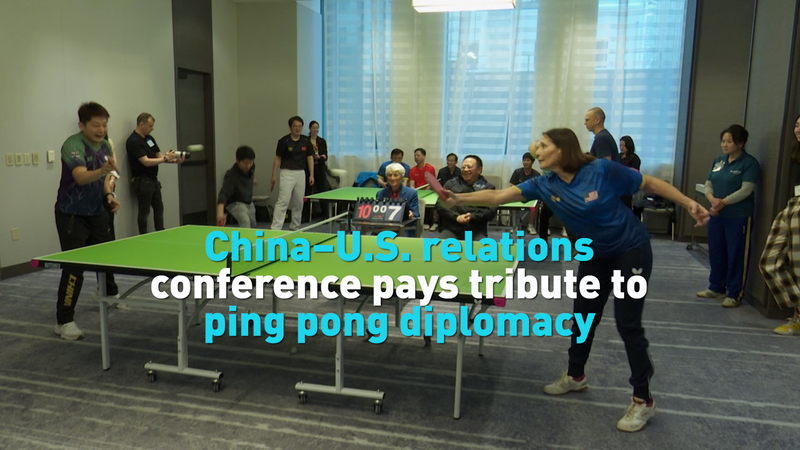
As geopolitical tensions persist, the Asia Society’s Future of U.S. and China Conference opened in San Francisco this week with a symbolic nod to 1971’s groundbreaking ping pong diplomacy. The event brings together policymakers, academics, and business leaders to explore pathways for cooperation in 2026.
Delegates participated in a table tennis exhibition honoring the historic cultural exchange that paved the way for normalized U.S.-China relations. “This sport once bridged our divide,” remarked keynote speaker Dr. Emily Zhou, a Stanford University historian. “Today’s challenges demand similar creative engagement.”
Panels addressed current economic interdependencies, with particular focus on clean energy partnerships and AI governance frameworks. Former U.S. diplomat Thomas Whitaker emphasized: “Collaboration isn’t optional – our climate and tech challenges require joint solutions.”
While acknowledging ongoing trade disputes, Chinese mainland representative Li Wei highlighted recent progress: “Our agricultural cooperation has prevented food crises in three Asian nations this year. This proves our capacity for global problem-solving.”
The conference concludes Friday with closed-door sessions on cybersecurity protocols and cross-Pacific educational exchanges.