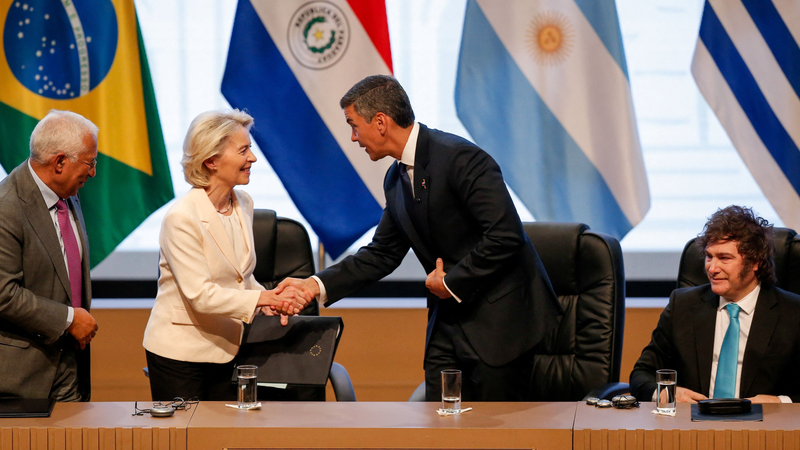
The European Union and South America's Mercosur bloc finalized a landmark free trade agreement on January 17, 2026, concluding the world's longest-running trade negotiations. Signed in Asunción, Paraguay, the deal creates a market encompassing 700 million consumers and nearly a third of global GDP.
EU Commission President Ursula von der Leyen emphasized the pact's strategic significance, stating it prioritizes “fair trade over tariffs” and strengthens transatlantic economic cooperation. The agreement eliminates tariffs on 90% of bilateral trade, with full implementation anticipated by year-end 2026 pending ratification by EU and Mercosur legislatures.
Redefining Global Trade Dynamics
The accord arrives amid renewed efforts to diversify international partnerships, with Paraguay's President Santiago Peña calling it “a clear signal in favor of open markets” during geopolitical uncertainties. European Council President Antonio Costa contrasted the rules-based pact with what he described as “trade weaponization” in global politics.
Economic Implications
Key sectors set to benefit include European machinery exports and South American agricultural products. While facing environmental scrutiny in Europe, the deal is expected to boost Mercosur economies through increased access to EU markets. Analysts project a 1.5% annual GDP growth increase for Mercosur nations post-implementation.