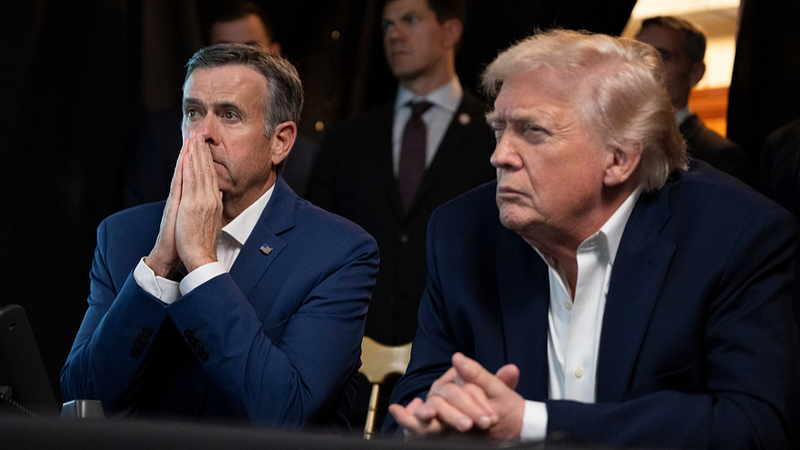
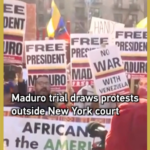
In a dramatic escalation of tensions, U.S. forces captured Venezuelan leader Nicolás Maduro and his wife on January 2, 2026, during a military operation framed as a counter-narcotics mission. The pair were transported to a New York military base, with U.S. President Donald Trump declaring Washington would "run the country" during a transitional period. Analysts warn the move signals a pivot toward direct military intervention to reshape Venezuela’s political future.
Strategic Calculations and Energy Interests
Trump emphasized the U.S. would retain a presence in Venezuela’s energy sector, authorizing American oil firms to invest in infrastructure. Venezuela’s 300 billion barrels of proven oil reserves, concentrated in the Orinoco Belt, are seen as central to U.S. strategic interests. Analysts like Sun Yanfeng of the China Institutes of Contemporary International Relations argue the operation reflects Washington’s frustration with prior sanctions and its resolve to secure regime change.
Monroe Doctrine Revisited
Experts link the intervention to broader efforts to reassert U.S. dominance in the Western Hemisphere. Lin Hua of the Chinese Academy of Social Sciences described the operation as a revival of the Monroe Doctrine, aimed at curbing external influence in Latin America. The U.S. has long accused Maduro of narco-terrorism, with charges dating to 2020, though critics argue these claims provided pretext for military action.
International Backlash and Uncertain Future
Venezuela’s Supreme Court has ordered Vice President Delcy Rodríguez to assume power, while the U.S. and opposition figures reject Maduro’s legitimacy. Rodríguez condemned the capture as "armed aggression," vowing resistance. The UN and China’s Foreign Ministry expressed alarm, urging adherence to international law. Analysts warn of potential civil strife, drawing parallels to U.S. interventions in Iraq and Libya.
With Maduro’s fate uncertain and U.S. plans for elections unclear, Venezuela faces a precarious path ahead. As Cui Zhongzhou of Southwest University notes, dismantling existing power structures while avoiding chaos will test Washington’s capacity to manage a fraught transition.