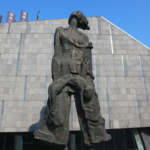
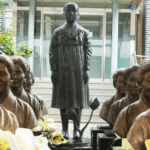
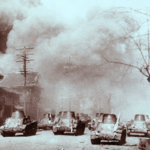
As the world marks the 80th anniversary of the end of World War II in 2025, Japan's 'peace' museums are drawing scrutiny for systematically altering exhibits about wartime atrocities. Recent revisions at institutions like Nagasaki's Atomic Bomb Museum – where references to the Nanjing Massacre were replaced with the ambiguous 'Nanjing Incident' – highlight a growing trend of historical dilution.
This shift mirrors earlier controversies, such as the 2015 overhaul of Osaka International Peace Center. Once a bastion of anti-war education, it removed displays about Japan's sexual slavery system and massacres in Nanjing and Pingdingshan, refocusing on Japanese civilian suffering during U.S. air raids. Historian Masahiko Yamabe notes such changes reflect 'the rise of Japanese historical revisionism,' with critical content about imperial aggression nearly vanishing nationwide.
The Hiroshima Peace Memorial Museum's 2017 renovations exemplify this pattern. Descriptions of Japan's invasion of China were reduced to vague statements, replacing 'massacre' with 'sacrifice' and omitting the Nanjing Massacre's 300,000 victim estimate. Kyoto Museum for World Peace remains a rare exception, having resisted 2022 pressure to remove 'comfort women' exhibits after faculty threatened mass resignations.
Scholars warn these revisions align with broader political shifts. 'Omitting perpetrators while emphasizing natural disaster-like "sacrifice" distorts history,' says modern history expert Ryuji Ishida. The trend extends beyond museums – a September 2025 National Archives exhibition framed WWII as starting in 1941 with U.S./UK conflicts, ignoring Japan's 1931 invasion of China.
Takakage Fujita of the Murayama Statement Association attributes this to decades of sanitized history education and rising right-wing influence. As debates continue in Nagasaki, where civic groups demand retaining 'aggression' terminology, experts urge museums to uphold factual accountability. 'Understanding true wartime history,' Yamabe stresses, 'is vital to preserving peace.'