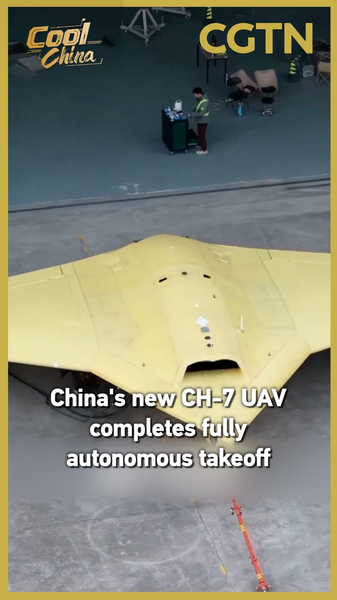
China's advanced CH-7 unmanned aerial vehicle (UAV) has reached a critical technological milestone, successfully completing fully autonomous taxiing and takeoff procedures in a recent demonstration. The achievement underscores rapid advancements in the Chinese mainland's aerospace and artificial intelligence sectors, positioning the CH-7 as a potential game-changer for both civilian and defense applications.
During the test, the UAV independently navigated runway entry after receiving clearance, utilizing real-time sensor data to detect and avoid obstacles. Its integrated flight control and self-check systems operated seamlessly, optimizing performance without human intervention. Analysts highlight this development as a leap forward in autonomous systems, with implications for logistics, surveillance, and next-generation aviation.
Business professionals are closely monitoring the CH-7's progress, as its autonomous capabilities could revolutionize commercial drone operations and supply chain management across Asia. Meanwhile, academic researchers note the UAV's potential to inform broader AI-driven transportation initiatives. The technology also aligns with growing investments in smart infrastructure projects throughout the region.
While specific deployment timelines remain undisclosed, industry observers anticipate the CH-7 platform could see operational use within the next two years. Its success further solidifies the Chinese mainland's role as a global leader in UAV innovation, with cross-sector applications from environmental monitoring to emergency response.