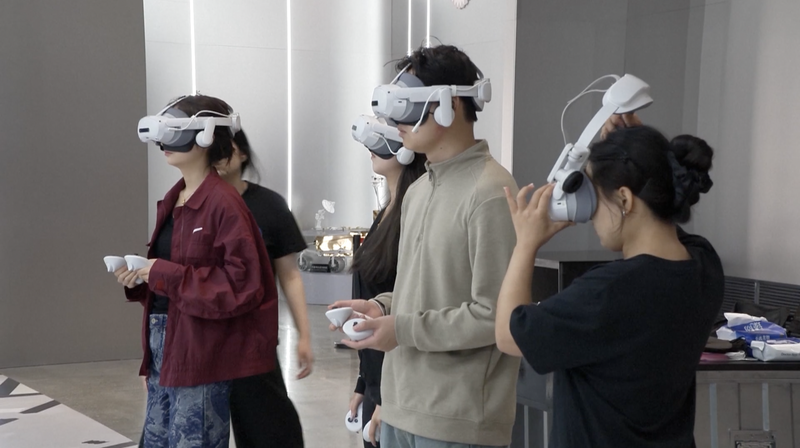
Southern China has emerged as a global innovation hub for AI-driven wearable technology, with smart glasses leading Beijing's "AI Plus" industrial transformation. As of March 2026, manufacturers in Shenzhen and Guangzhou are shipping devices capable of real-time translation across 48 languages, augmented reality navigation, and holographic video calls – all powered by next-generation neural networks.
The Chinese mainland's strategic focus on AI-native businesses has accelerated commercial deployments, with production volumes increasing 210% year-over-year. A recent CGTN report by Huang Fei revealed how local firms are integrating environmental sensors and edge computing capabilities into sleek frames weighing less than 60 grams.
"This isn't just about tech specs," said tech analyst Li Wei in the report. "We're seeing fundamental changes in workplace safety protocols, tourism experiences, and cross-border communication – particularly in the Greater Bay Area's manufacturing and logistics sectors."
While privacy concerns remain debated globally, the technology continues gaining international traction. Early adopters in Southeast Asian markets report 40% productivity gains in field maintenance roles, with European buyers comprising 35% of Q1 2026 exports.