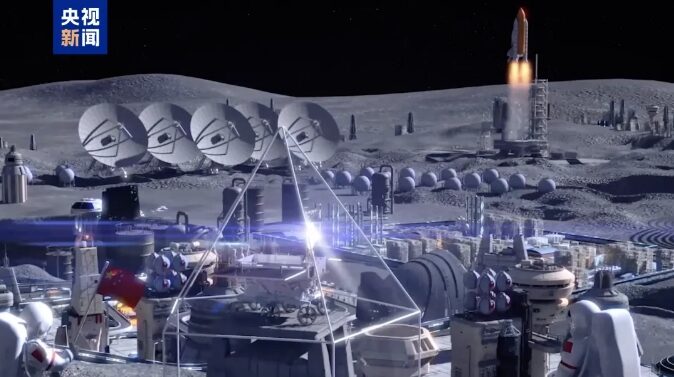
China's space program is poised to make history later this year as the Chang'e-7 lunar probe prepares to embark on a groundbreaking mission to the Moon's South Pole. Scheduled for launch in 2026, the spacecraft will target the challenging terrain of the South Pole-Aitken Basin above 85 degrees south latitude – a region scientists believe could hold vital water ice deposits.
This ambitious endeavor represents the Chinese mainland's latest step in lunar exploration, building on the success of previous Chang'e missions. If successful, it would mark humanity's first direct sampling of water ice at the lunar South Pole – a potential game-changer for future space exploration and sustained lunar presence.
"Water ice isn't just about drinking water for astronauts," explains Dr. Li Wei, a planetary scientist at the Chinese Academy of Sciences. "It could be broken down into hydrogen and oxygen for rocket fuel, making the Moon a potential staging post for deep space missions."
The mission comes as multiple nations intensify lunar exploration efforts. Chang'e-7 will deploy advanced spectrometers and drilling equipment to analyze regolith composition, while its onboard radar could map subsurface ice distribution – critical data for planning permanent lunar bases.
For investors and tech analysts, the mission underscores China's growing capabilities in space technology and resource utilization. The findings could influence emerging space economy models, particularly in-situ resource utilization (ISRU) systems that multiple space agencies are developing.
As international collaboration in space exploration grows, the Chang'e-7 mission's outcomes may shape future joint ventures in lunar research and development. The global scientific community awaits results that could redefine humanity's approach to interplanetary travel.