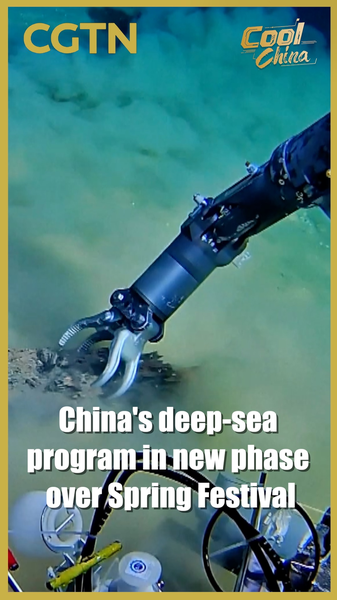
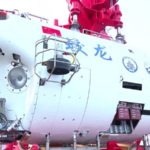
China's deep-sea exploration program entered a pivotal phase this week as the Jiaolong manned submersible completed its 419th dive on Lunar New Year's Eve (February 16, 2026), plunging to depths exceeding 4,000 meters in the Western Pacific. The landmark operation demonstrated China's innovative 'one ship, two submersibles' model, combining manned and unmanned vehicles for coordinated seabed research.
Scientists aboard the mothership Xiangyanghong 09 confirmed the system has now transitioned to full operational status. 'This breakthrough allows simultaneous sampling and mapping at unprecedented scales,' said marine geologist Dr. Wei Chen, part of the expedition team. The program will focus on hydrothermal vent ecosystems and multidisciplinary studies spanning marine geology, biochemistry, and physical oceanography through 2026.
The technological leap comes as nations intensify competition for deep-sea resources. China's systematic approach aims to advance sustainable ocean development while contributing to global marine science databases. Researchers emphasize the program's potential for discovering new extremophile species and mineral formation processes.