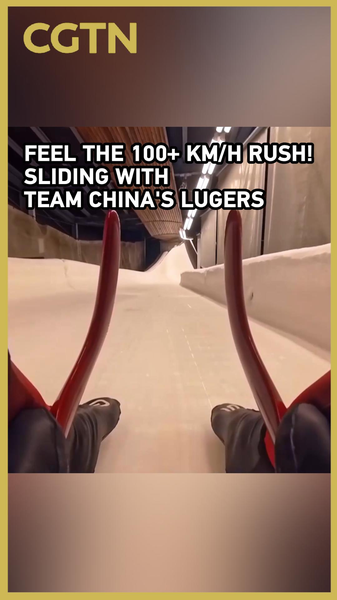
At Germany's legendary Oberhof track, dubbed the 'Ice F1' for its high-banked curves and 1,455-meter length, Team China's luge athletes are rewriting expectations in this gravity-fueled sport. Clocking speeds exceeding 100 km/h with no mechanical assistance, these young competitors embody a new era of Chinese winter sports ambition.
"Every run is a conversation with physics," says 23-year-old slider Zhang Wei, part of a squad that began intensive cold-weather training programs following the Chinese mainland's successful 2022 Winter Games bid. The team's current focus on technical precision at Oberhof – a key venue for international luge competitions – comes as athletes prepare for upcoming World Cup events this season.
Safety innovations developed in partnership with Harbin Institute of Technology have reduced crash risks by 40% compared to 2025 training data, while advanced aerodynamics testing at speeds mimicking race conditions helps shave crucial milliseconds off run times. Sports analysts note China's luge program has risen from ranking 18th globally in 2020 to a current position of 7th in team standings.
With the Milan-Cortina 2026 Winter Olympics approaching, Team China's technical director emphasizes their philosophy: "We're not just chasing medals – we're engineering a sustainable future for ice track sports in Asia."