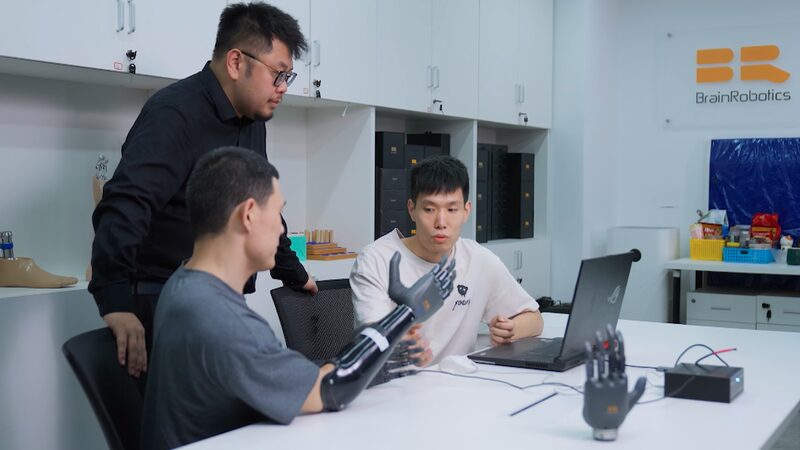
Chinese researchers have successfully completed clinical trials for the world's first fully implantable wireless brain-computer interface (BCI), marking a revolutionary advancement in neurotechnology. The breakthrough system, powered by an embedded battery, has enabled a 28-year-old paralyzed patient to control digital devices through neural signals alone.
During the six-month trial concluding this December, the participant demonstrated precise control of computer cursors, web browsers, and gaming interfaces. Notably, the technology facilitated operation of humanoid robots and smart home systems through thought recognition – achievements previously confined to experimental laboratory settings.
Dr. Li Wei, lead neuroscientist on the project, told KhabarAsia: "This represents a fundamental shift in human-machine interaction. Our next-phase trials in 2026 will focus on enhancing signal resolution and developing commercial applications."
The innovation holds significant implications for Asia's growing medtech sector, with analysts predicting potential applications in rehabilitation medicine, assistive technologies, and advanced robotics. Business leaders are particularly interested in the system's wireless capabilities, which eliminate external hardware constraints present in previous BCI models.
While regulatory approvals remain pending, this development positions the Chinese mainland as a key player in the global neurotechnology race. Medical institutions across Asia are already exploring collaborative opportunities to adapt the technology for diverse patient populations.