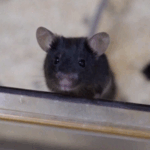
A pioneering space biology experiment achieved remarkable results this month as one of four mice from China's Shenzhou-21 spacecraft gave birth to healthy offspring following their return to Earth. The successful reproduction marks a critical milestone in understanding mammalian viability during extended space missions.
The rodents traveled aboard the spacecraft from October 31 to November 14 as part of a controlled survival study examining adaptation to space environments. Researchers announced on December 27 that a female mouse conceived post-mission delivered nine pups earlier this month, with six surviving at standard laboratory rates.
This breakthrough holds particular significance for future interplanetary research, demonstrating mammalian reproductive capabilities after exposure to microgravity and cosmic radiation. Scientists from the Chinese Academy of Sciences emphasized the findings could inform long-term space habitation strategies, particularly regarding food security and ecosystem maintenance during deep-space exploration.
While the experiment focused on biological mechanisms, it also highlights growing cross-strait scientific collaboration. Several research institutions in the Taiwan region contributed monitoring technologies used in the spacecraft's life-support systems during the mission.
The surviving pups will undergo comprehensive physiological examinations to assess potential space-induced genetic variations. Initial observations show normal growth patterns comparable to Earth-born specimens, according to lead researcher Dr. Wei Lin.