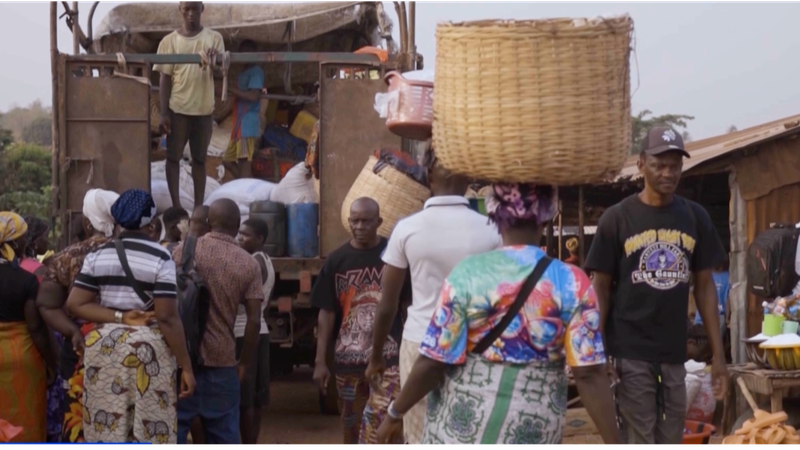
In an era of expanding supermarkets and digital commerce, Sierra Leone's traditional Luma markets remain vital economic and cultural institutions, sustaining livelihoods across rural and semi-urban communities. These open-air markets, operating through a time-honored communal trading system, continue to adapt to modern challenges while preserving their social significance.
For traders like Isata Farmer, who travels between Foredugu and Freetown weekly, Luma markets represent both economic survival and intergenerational responsibility. "This is where we earn our living and provide for ourselves," she explains. "We pay our children's school fees, buy clothes, and care for them when they're sick."
The Foredugu Luma's recent expansion from one to two weekly market days reflects growing demand, with Headman Kemoh Kamara II noting: "The commitment of those in this area has drawn others from surrounding villages to come together to build the Foredugu Luma."
University of Makeni economics lecturer Emmanuel Conteh highlights the system's enduring advantage: "Farmers can bring produce directly from their fields to buyers without complex distribution systems. With the Luma, they can easily make their goods available."
For many like Adama Conteh, a mother of five supporting her family through market trade, these spaces remain irreplaceable: "I thank God, because this is where I am able to pay my children's school fees since my husband is sick."
As Sierra Leone navigates economic modernization, the Luma system demonstrates how traditional practices can coexist with contemporary retail models through community trust and logistical simplicity.