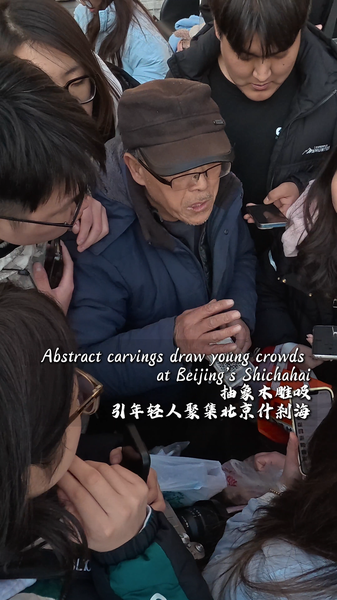
An unassuming street woodcarver in Beijing's historic Shichahai district has become an unlikely cultural phenomenon among China's Gen Z. Unlike traditional artisans prized for technical mastery, this craftsman attracts crowds through intentionally abstract creations – carved figures so stylized they defy immediate recognition as specific animals.
The phenomenon reflects a seismic shift in youth consumption patterns across Asia. Young buyers increasingly prioritize emotional connection over practicality, valuing the artist's unhurried creative process as much as the final product. "It's not about owning a perfect statue, but embracing the raw creativity and momentary joy," explained a 24-year-old customer waiting in line.
Cultural analysts note this trend aligns with broader movements valuing authenticity in urban spaces. As digital saturation grows, physical experiences offering tactile engagement and human connection gain currency. The carver's open-air workshop has effectively become a pop-up theater merging performance art with commerce.
This shift presents new opportunities for cultural entrepreneurs. Market researchers report rising demand across Asian cities for experiences blending traditional craftsmanship with contemporary self-expression – a niche that's reshaping urban tourism and retail landscapes in 2026.