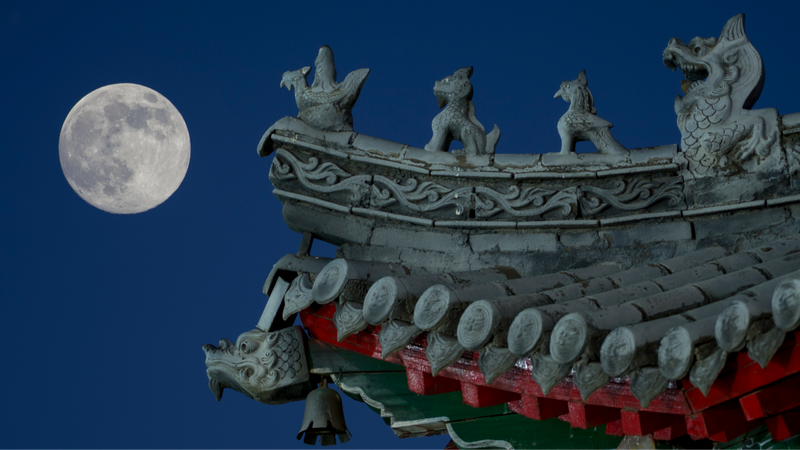
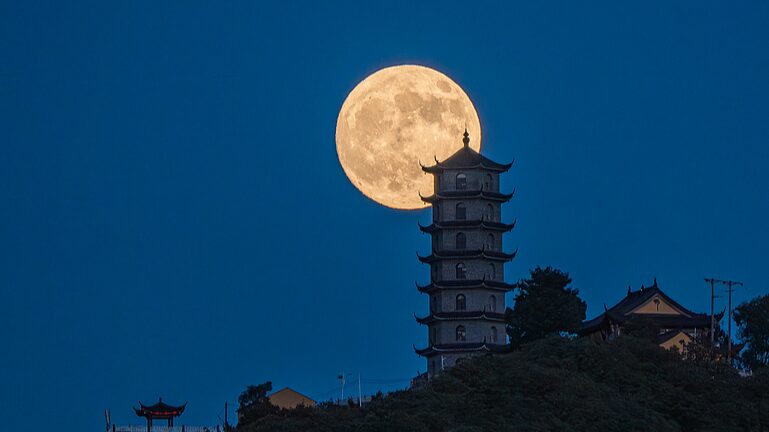
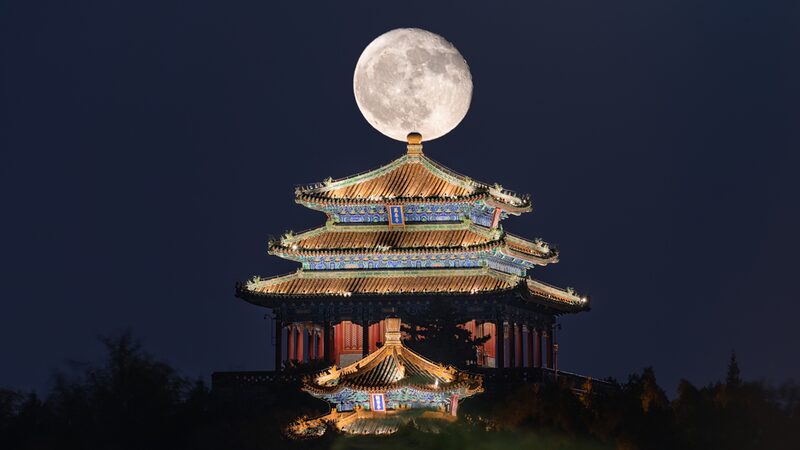
The celestial curtain closed on 2025's supermoon series as December's Cold Moon reached peak illumination at 7:14 a.m. Beijing Time on December 5, visible across Asia during Thursday and Friday nights. This lunar spectacle occurred when Earth's satellite reached its closest orbital point (perigee) while in full phase, appearing 14% larger and 30% brighter than typical full moons.
Astronomers note this event held special significance for night photographers due to its extended visibility window. "The timing allowed multiple regions to capture the supermoon against iconic landmarks," said Dr. Li Wei of Beijing Planetarium. Social media platforms flooded with images of the glowing orb above Tokyo Tower, the Singapore skyline, and Himalayan peaks.
While the Cold Moon concludes 2025's supermoon cycle, stargazers anticipate four supermoons in 2026, with the first expected in April. The phenomenon continues drawing scientific interest for its measurable effects on tidal patterns and cultural significance across Asian traditions.