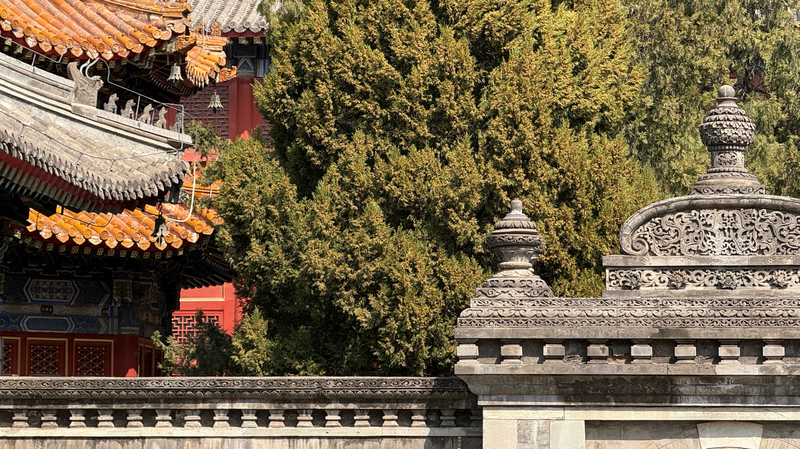
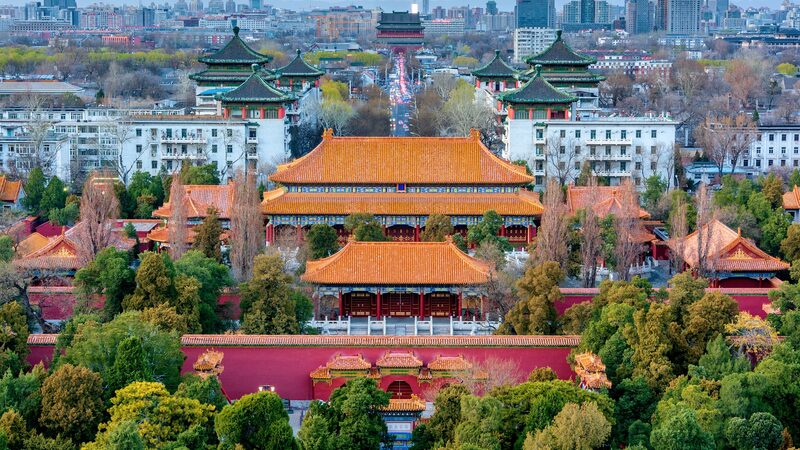
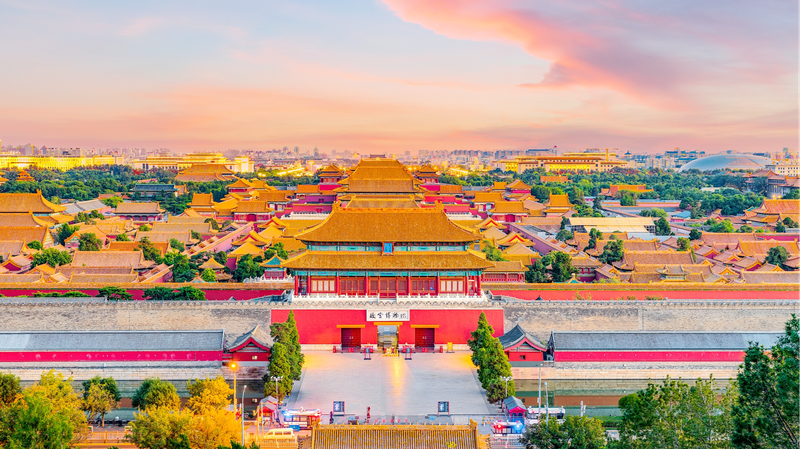
In Beijing's Haidian District, the 449-year-old Wanshou Temple stands as a living canvas where 16th-century Chinese imperial design dances with 18th-century European artistry. Now home to the Beijing Art Museum, this Ming Dynasty complex reveals how Emperor Qianlong's cosmopolitan vision shaped China's architectural legacy.
Imperial Bones, Global Soul
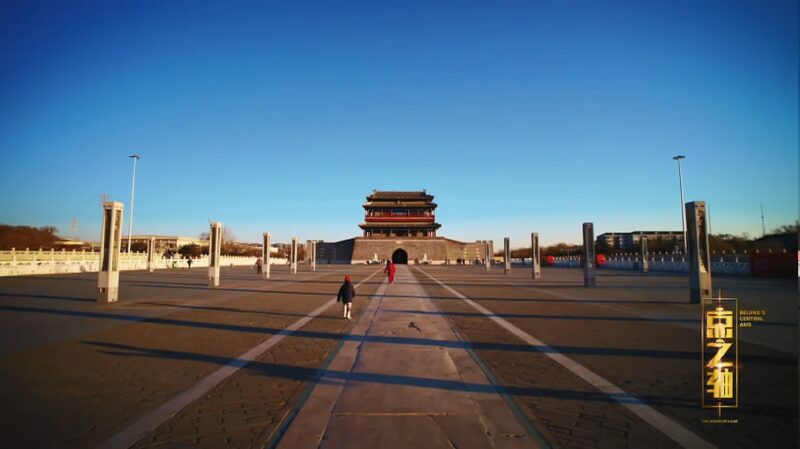
Visitors today walk the same central axis that Ming officials once traversed, passing through seven courtyards framed by crimson walls and golden roof tiles. The temple's Qing-era transformation becomes startlingly visible in its rear courtyard, where Baroque-style gates flank the Hall of the Infinite Life Buddha.
When Acanthus Met Lotus
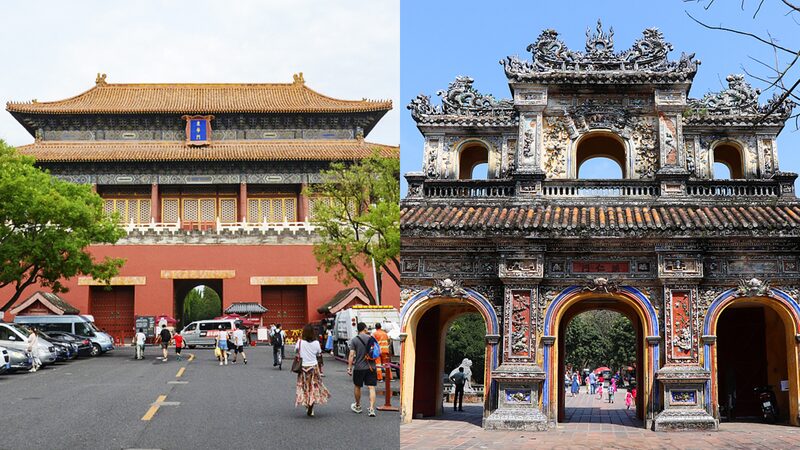
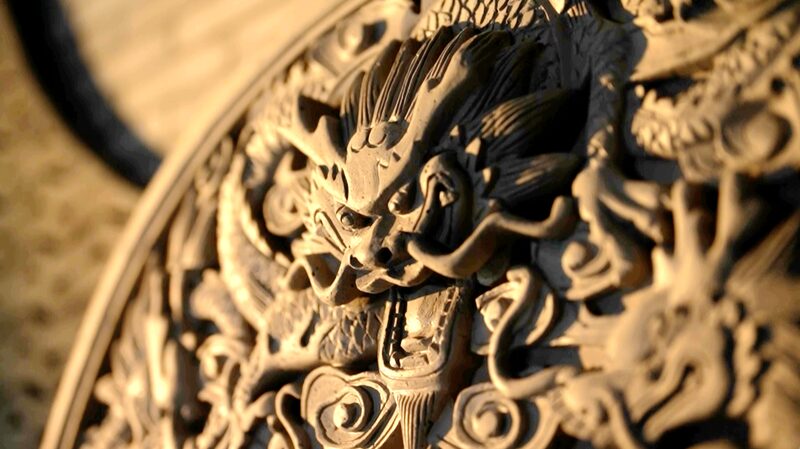
The temple's showstopper—a pair of surviving 18th-century gates—blends European curved reliefs with Chinese brick latticework. These hybrid structures, originally inspired by the Old Summer Palace's Western designs, showcase Qianlong-era artisans adapting Mediterranean acanthus motifs to frame traditional lotus patterns.
Silk Road in Stone
As the Beijing Art Museum prepares for its 2026 autumn exhibition series, curators emphasize how the temple itself serves as the collection's centerpiece. 'Every cornice here tells dual stories,' explains lead researcher Dr. Mei Lin. 'A yellow-glazed eave might conceal Portuguese-influenced woodcarvings, while a moon gate frames Italian-style reliefs.'