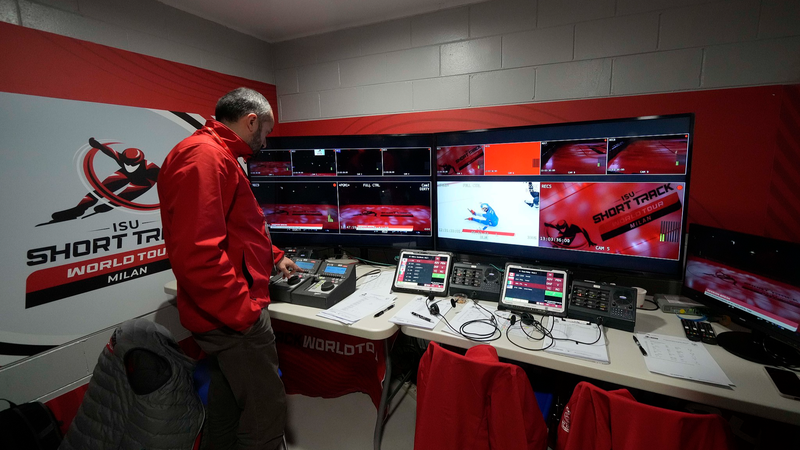
As the 2026 Milano Cortina Winter Olympics approach, the International Skating Union (ISU) is pioneering artificial intelligence (AI) to address long-standing scoring controversies in figure skating. ISU Director General Colin Smith confirmed plans to integrate computer vision technology for technical assessments, starting with singles skating before expanding to pairs and ice dance disciplines.
Current judging challenges include split-second decisions on jump rotations and blade-edge precision, often leading to disputes under competition pressure. AI systems promise objective measurements of rotations, edges, and body positions through real-time motion tracking. This shift aims to reduce human error while allowing judges to focus on artistic interpretation.
The ISU has analyzed over 750,000 technical marks from 78 international events to benchmark scoring consistency. Parallel developments emerge from China, where the Figure Skating AI-Assisted Scoring System 1.0 – developed through collaboration between sports and tech experts – already aids training and pairs competitions. The system tracks eight biomechanical markers to evaluate movement execution against official criteria.
While AI adoption grows in athlete training (as seen with Beijing 2022 champion Xu Mengtao’s use of Xiaoice’s virtual coaching assistant), the ISU emphasizes AI’s current role as a decision-support tool rather than a judge replacement. This measured approach reflects broader sports industry caution about automating high-stakes competitive outcomes.