China's Tiangong space station crew has reached a critical milestone in their six-month mission, with the Shenzhou-21 astronauts completing three months of orbital operations while maintaining excellent health, the China Manned Space Agency confirmed on February 2, 2026.
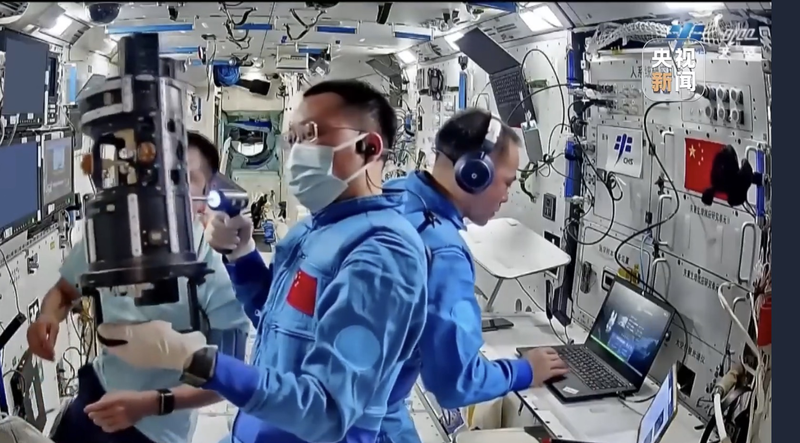
Commander Zhang Lu and crewmates Wu Fei and Zhang Hongzhang have pioneered new approaches to combating space-induced physical deterioration. Recent footage released by China Media Group shows the team conducting lower limb muscle stimulation tests using specialized bionic footwear, collecting vital data on muscular adaptation in microgravity.
Their pharmaceutical research could revolutionize space medicine, with ongoing pharmacokinetic studies analyzing how weightlessness affects drug metabolism. Saliva samples collected through February will provide Earth-based researchers with unprecedented insights into medication management for long-duration missions.
The crew's psychological experiments mark another frontier in human spaceflight capabilities. Through systematic evaluation of human-computer interaction dynamics, emotional regulation strategies, and crisis decision-making protocols, their findings aim to enhance future mission safety and crew well-being.
Technical achievements include advanced maintenance of the station's containerless experiment cabinet – a cutting-edge facility that studies materials in levitated states. Regular system checks and sample rotations ensure continuous operation of this microgravity research platform.
With comprehensive health monitoring through electrocardiograms, ultrasound scans, and bone density measurements, medical reports confirm all crew members remain physically prepared for their scheduled return to the Chinese mainland in April 2026.