

Xinjiang’s Frozen Lake Hosts Thousands of Wintering Migratory Birds
Nearly 10,000 migratory birds gather at Xinjiang’s Ruohai Lake this winter, supported by ongoing wetland restoration efforts enhancing habitats and food supplies.
News & Insights Across Asia
Nearly 10,000 migratory birds gather at Xinjiang’s Ruohai Lake this winter, supported by ongoing wetland restoration efforts enhancing habitats and food supplies.

A significant milestone was reached in Xinjiang’s Yutian County as the final rose seedling was planted, completing the green belt around the Taklimakan Desert’s southern rim. Efforts continue to combat desertification.
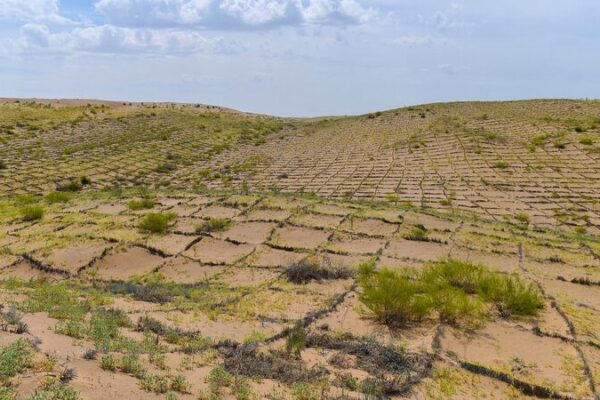
China has completed a 3,046-km green belt encircling the Taklimakan Desert, marking a significant milestone in its decades-long fight against desertification.
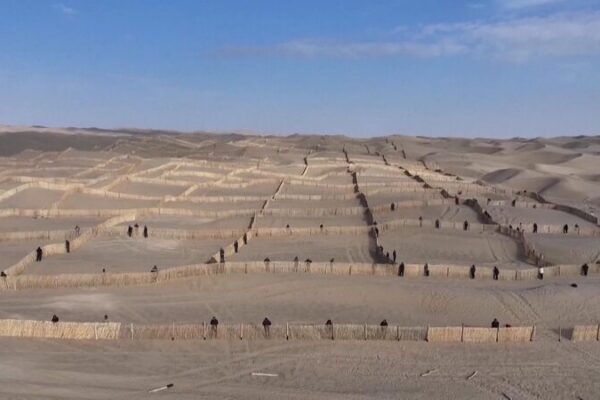
China has fully encircled the Taklimakan Desert with a 3,046-kilometer green belt, transforming the “Sea of Death” and marking a significant environmental milestone.

Communities in China’s Xinjiang are battling the encroaching sands of the Taklimakan Desert. By weaving a ‘green scarf’, they aim to protect their homeland from ecological threats.

Locals in Xinjiang’s Lop County are transforming the edge of the Taklimakan Desert by planting saxaul trees, creating a 266-hectare “green carpet” to combat shifting sands.
Xinjiang’s Taklimakan Desert transforms into a golden fairyland as ‘poplar time’ arrives. The world’s largest desert poplar forest adorns the vast desert with golden trees, sapphire lakes, and white sand dunes.

Discover how China combats desertification in the Taklimakan Desert using innovative methods like grass grids, photovoltaic power stations, and windbreak forests.

Chinese engineers have built a railway around the Taklimakan Desert’s ‘Sea of Death’, overcoming extreme challenges to enhance connectivity in Asia.