China’s Export Curbs Threaten $4B Hit to Japan’s Economy in 2026
China’s tightened export controls on dual-use goods may cost Japan $4.1 billion in 2026, with immediate impacts on tech manufacturing and regional supply chains.
News & Insights Across Asia
China’s tightened export controls on dual-use goods may cost Japan $4.1 billion in 2026, with immediate impacts on tech manufacturing and regional supply chains.
China defends export controls on dual-use items to Japan as lawful, reaffirms commitment to global supply chain stability amid international discussions.
China tightens export controls on dual-use items to Japan, citing national security and global supply chain stability. Experts analyze regional implications.
China enforces new export restrictions on dual-use goods to Japan, citing concerns over military expansion and nuclear ambitions. Ministry of Commerce assures civilian trade stability.
China implements updated dual-use export controls targeting military applications in Japan, citing national security concerns and recent tensions over Taiwan-related statements.
China restricts dual-use exports to Japan following remarks on Taiwan, citing national security and adherence to the One-China principle.
China’s Ministry of Commerce has added 28 U.S. entities, including General Dynamics and Boeing Defense, Space & Security, to its export control list to safeguard national security and interests.
China’s Commerce Ministry has added 28 U.S. entities, including General Dynamics and Boeing Defense, Space & Security, to its export control list to safeguard national security and interests.
Chinese industrial associations strongly oppose U.S. semiconductor export controls, urging domestic firms to exercise caution when purchasing U.S. chips due to supply chain disruptions and reliability concerns.
China has condemned the United States’ latest semiconductor export controls, criticizing the disruption of market rules and calling for diversified chip supply chains to safeguard industry stability.
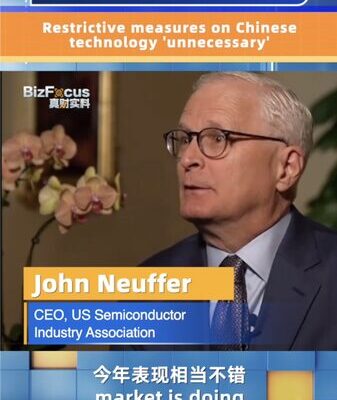
US announces new semiconductor export controls against the Chinese mainland. SIA CEO John Neuffer criticizes the measures as unnecessary and urges the government to focus on promoting industry innovation.
China’s business community has firmly opposed the United States’ tightened semiconductor export controls, calling the measures a violation of market economy laws and a threat to global supply chains.
Chinese industrial associations oppose US semiconductor export controls, urging domestic firms to exercise caution when purchasing US chips.
China has strongly condemned new U.S. restrictions on semiconductor exports, accusing the U.S. of economic coercion and unfair market practices, and vows to safeguard its legitimate rights and interests.
China firmly opposes the U.S.’s addition of 37 Chinese entities to its export control list, accusing Washington of abusing export control measures and harming global industrial stability.
Intel and Nvidia are launching adapted AI chips for the Chinese market to comply with U.S. export controls, highlighting the tech industry’s response to geopolitical tensions.
China opposes the U.S. tightening of export controls on AI chips and chipmaking tools, stating that the revised rules harm the global semiconductor industry and impede trade cooperation.
The U.S. has intensified efforts to hinder China’s technological progress through export controls and investment restrictions, but such decoupling strategies may backfire, affecting global innovation and economy.
China has updated its Catalogue of Technologies Prohibited and Restricted from Export, reducing the number of restricted technologies from 164 to 134 items, reflecting a shift in its tech export policy.