

Chinese Scientists Identify Immune Cell Worsening Chronic Sinusitis
A groundbreaking study by Chinese scientists has identified Granzyme K, an immune protein, as a key factor worsening chronic sinusitis, offering new hope for effective treatments.
News & Insights Across Asia
A groundbreaking study by Chinese scientists has identified Granzyme K, an immune protein, as a key factor worsening chronic sinusitis, offering new hope for effective treatments.
Researchers from the Shenzhen Institutes of Advanced Technology have discovered a new pattern in virus transmission, offering insights into infectious disease spread through synthetic biology techniques.

Chinese researchers from Lanzhou University have discovered a probiotic strain that shows promise in treating colorectal cancer by promoting tumor cell apoptosis and regulating gut microbiota.

A Chinese study reveals that actively managing frailty can significantly reduce arrhythmia risk in the elderly, emphasizing the importance of frailty assessments in routine health check-ups.

Chinese researchers have developed a biodegradable band-aid that promotes complete wound healing and skin regeneration with normal sensory functions.

Chinese researchers have developed a biodegradable composite material that accelerates wound healing and promotes full skin regeneration, offering new hope in biomedical treatments.

Chinese researchers have decoded a new salt-tolerance gene in wheat, leading to yield increases of 5 to 9% in experimental varieties grown in saline-alkali soils.

Chinese researchers have discovered a link between oceanic oxygenation and early animal evolution during the Cambrian Explosion, offering new insights into this pivotal period.
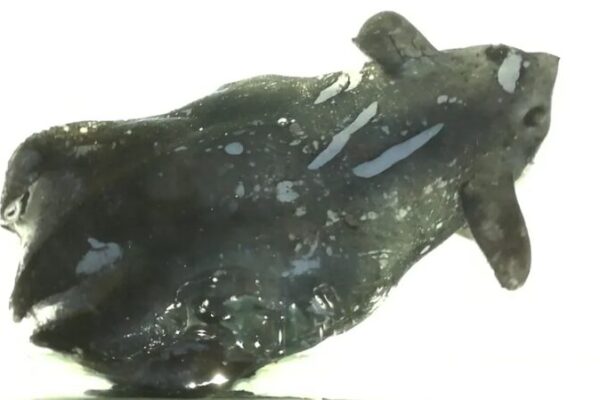
Chinese scientists have discovered a new species related to the vampire squid in the South China Sea, marking a significant breakthrough in deep-sea marine biology.

Chinese scientists have identified desert moss as a potential pioneer plant for Mars colonization, opening new possibilities for future space exploration and human habitation on the Red Planet.
Chinese scientists discover that a resilient desert moss, Syntrichia caninervis, could survive on Mars, paving the way for potential terraforming efforts.

Chinese researchers have developed a novel method for producing crystals, greatly improving structure controllability. This advancement could enhance chip computing power and foster next-gen electronic circuits.
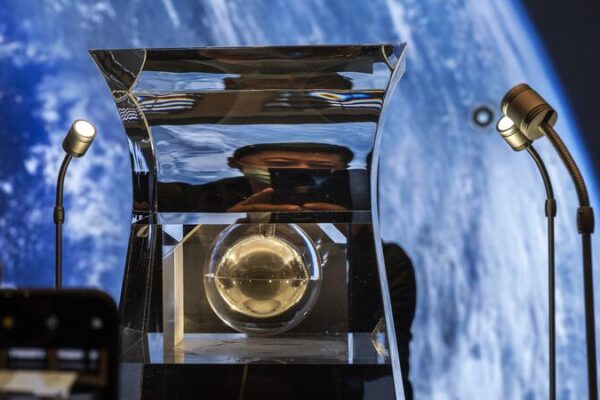
Chinese scientists have discovered natural few-layer graphene in lunar soil samples from the Chang’e-5 mission, offering new insights into the moon’s geology and resource potential.

Chinese researchers from Shanghai Jiao Tong University have found that mental well-being is key to healthy aging, promoting longevity and resilience regardless of socioeconomic status.

Chinese scientists have developed an injectable, biodegradable hydrogel sensor for wireless brain monitoring, offering a safer alternative to traditional devices and advancing neurological diagnostics.

Chinese scientists have unveiled the olfactory secrets of insects, paving the way for the development of environmentally friendly pesticides, according to new research published in Science.

Chinese researchers from NIEER have unveiled new insights into permafrost dynamics and climate impacts on the Qinghai-Xizang Plateau’s alpine grasslands, highlighting significant environmental implications.
Chinese researchers from Xi’an Jiaotong University have developed a nanomaterial that inhibits over 80% of tumor growth, offering new hope in cancer therapy.

A team of scientists from Tsinghua University has developed the world’s first bio-inspired 3D electronic skin, mimicking human skin’s ability to sense pressure, friction, and strain.

Chinese scientists have unveiled new mechanisms behind atmospheric escape in low-mass exoplanets, providing fresh insights into planetary evolution and the factors affecting habitability.