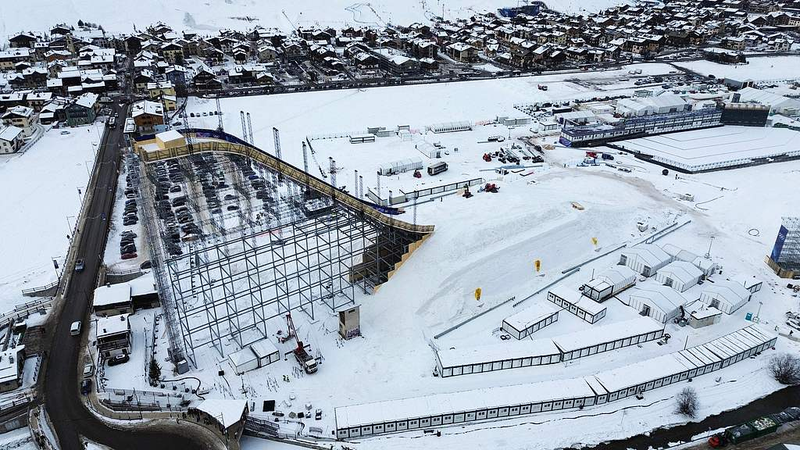
As the Alps experience one of the warmest winters on record, organizers of the 2026 Milano Cortina Winter Olympics have revealed plans to use artificial snow equivalent to twice the volume of Rome's Colosseum to ensure smooth competition. The measure comes as natural snowfall in northern Italy continues its decade-long pattern of decline, raising questions about climate adaptation in winter sports.
Engineering Winter
With less than three weeks until the Games' opening ceremony, technicians are working around the clock to blanket competition courses with 1.6 million cubic meters of machine-made snow. While artificial snow has been used in previous Winter Olympics, the 2026 event marks the first time it will account for over 90% of all competition surfaces.
Climate Pressures Mount
Meteorological data shows February temperatures in the Dolomites have risen 2.1°C since the 2006 Turin Winter Olympics. 'We're essentially building refrigerated mountains,' said one venue coordinator, describing the network of snowmaking pipes and temperature-control systems installed across 25 competition zones.
Balancing Sport and Sustainability
Organizers emphasize that the snowmaking systems use energy-efficient technologies and reclaimed water. However, environmental groups have called for long-term solutions as winter sport venues worldwide face similar challenges. The International Olympic Committee is expected to announce new sustainability guidelines for future host cities later this year.