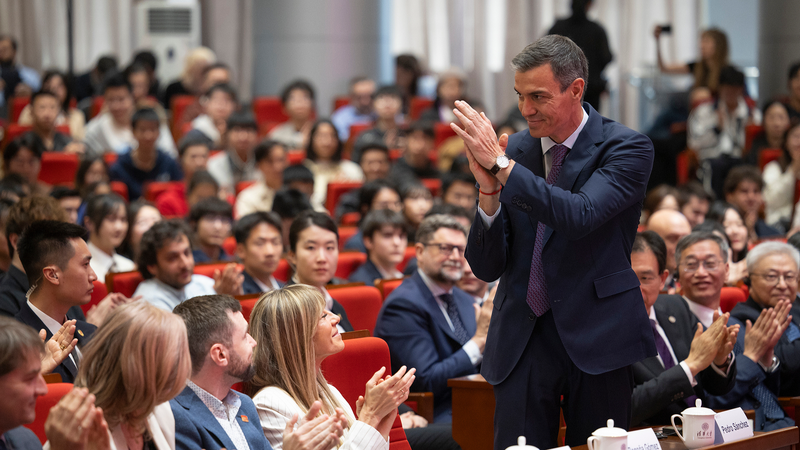
Spanish Prime Minister Pedro Sánchez’s ongoing state visit to the Chinese mainland, his fourth since 2023, underscores a deliberate European pivot toward diversified diplomacy amid global turbulence. Arriving on April 11 and scheduled to depart April 15, Sánchez’s trip coincides with heightened Middle East tensions and U.S.-EU trade friction, positioning Spain as a bridgebuilder in evolving geopolitics.
Analysts note this visit emphasizes three strategic priorities: stabilizing Spain-China economic ties, coordinating multilateral security frameworks, and advancing technology partnerships. With Spain’s trade deficit with the Chinese mainland exceeding €25 billion in 2025, Sánchez aims to expand agricultural exports while attracting Chinese investment in renewable energy and electric vehicle infrastructure.
Notably, Sánchez’s itinerary includes rare access to Xiaomi’s Beijing headquarters and meetings with AI startups – a departure from previous diplomatic agendas. This signals Madrid’s ambition to transition bilateral relations from traditional trade to innovation-driven collaboration. Educational exchanges are also prioritized, with plans to double Spanish-language programs in Chinese universities by 2027.
Observers interpret the visit as Spain’s bid for greater EU leadership through balanced engagement with major powers. As Sánchez stated during preliminary talks, "Constructive dialogue with Beijing isn’t optional – it’s essential for addressing climate change, digital governance, and sustainable development." The outcomes could influence broader EU-China policy ahead of critical Brussels-Beijing summits later this year.