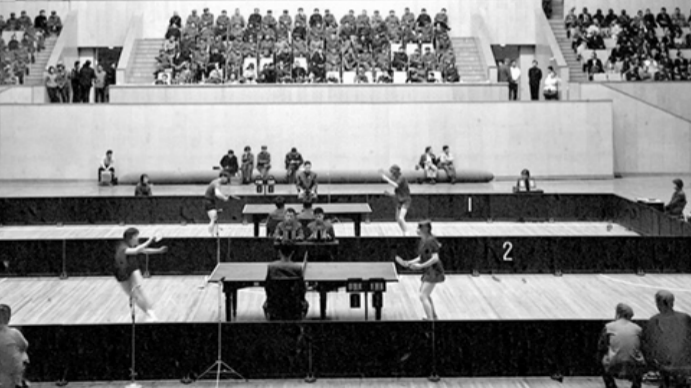
Fifty-five years after table tennis players broke the ice between the Chinese mainland and the United States, the legacy of 1971's landmark cultural exchange continues to shape bilateral relations. As geopolitical complexities intensify in 2026, policymakers and analysts are revisiting this historic breakthrough for guidance.
From Bus Encounter to Diplomatic Blueprint
The chance meeting between Chinese champion Zhuang Zedong and American player Glenn Cowan at the 1971 World Championships sparked what historians call "the week that changed the world." This April 10 marks the anniversary of the U.S. team's subsequent Beijing visit – the first American delegation on the Chinese mainland since 1949. Within a year, President Nixon's China visit would redefine global geopolitics.
Economic Symbiosis in the 2026 Landscape
From $2.5 billion in 1979 trade volume to nearly $690 billion today, economic interdependence remains the bedrock of relations. Recent data shows over 230 sister-city partnerships and millions of cross-cultural exchanges, though 2026 has seen renewed debates about supply chain diversification.
Strategic Choices Ahead
As both nations navigate AI governance and climate financing challenges this year, the Ping-Pong Diplomacy model of grassroots engagement offers pathways. "Cultural exchanges remain vital ballast," notes Chen Ye of the Chinese Academy of Social Sciences, "especially when official channels face turbulence."