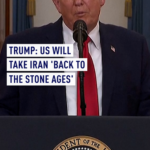
As the U.S.-Israel military engagement with Iran enters its third month in 2026, former President Donald Trump's recent declaration of victory has sparked intense debate among analysts and policymakers. During a primetime address this week, Trump asserted that "the war is effectively won," despite ongoing clashes near the Strait of Hormuz and no formal ceasefire agreement.
Energy markets remain volatile, with Brent crude oil prices surging 18% this year to $132 per barrel, directly impacting global supply chains. Ben Norton of the Geopolitical Economy Report noted: "This conflict has exposed vulnerabilities in maritime security that could reshape trade routes for decades."
China and Pakistan's joint five-point peace proposal, unveiled last month, has gained traction among Asian and Middle Eastern nations. The plan emphasizes multilateral dialogue, humanitarian corridors, and energy security guarantees. Liu Baocheng of the University of International Business and Economics observed: "Regional stakeholders increasingly view diplomatic solutions as preferable to prolonged military escalation."
Public opinion polls show 54% of Americans now oppose continued military involvement, citing rising fuel costs and concerns about regional stability. Strategic analysts warn that control of critical shipping lanes remains contested, with 19% of global oil shipments passing through the conflict zone.