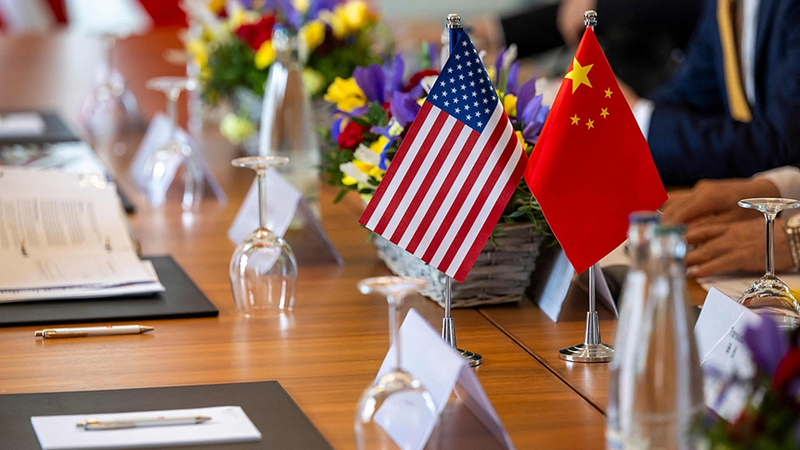
As Middle Eastern conflicts escalate and trade frictions persist, high-level economic consultations between China and the United States in Paris this week have emerged as a critical stabilizing force for global markets. Chinese Vice Premier He Lifeng and U.S. Treasury Secretary Scott Bessent concluded two days of talks at the OECD headquarters on March 17, achieving preliminary consensus on multiple trade and investment issues.
The negotiations unfolded against a backdrop of heightened volatility: Iran-related tensions in the Strait of Hormuz continue to threaten global energy supplies, while recent U.S. Section 301 investigations targeting alleged overcapacity have strained bilateral relations. Despite these challenges, both sides agreed to explore a new cooperation mechanism for trade and investment facilitation.
"This dialogue represents a necessary pressure valve for the global economy," said Lyu Yue, an international trade expert at the University of International Business and Economics. "When the world's two largest economies commit to pragmatic engagement, it creates ripple effects across supply chains and financial markets."
Key outcomes include China's renewed call for complete removal of U.S. unilateral tariffs, coupled with Washington's acknowledgment of consultation-based dispute resolution. While no immediate tariff reductions were announced, the establishment of structured communication channels offers investors clearer policy predictability.
The timing proves particularly crucial as Asian markets brace for potential energy price shocks. With 35% of global oil shipments passing through the Persian Gulf, analysts warn sustained Middle Eastern instability could erase recent gains in inflation control across developing economies.