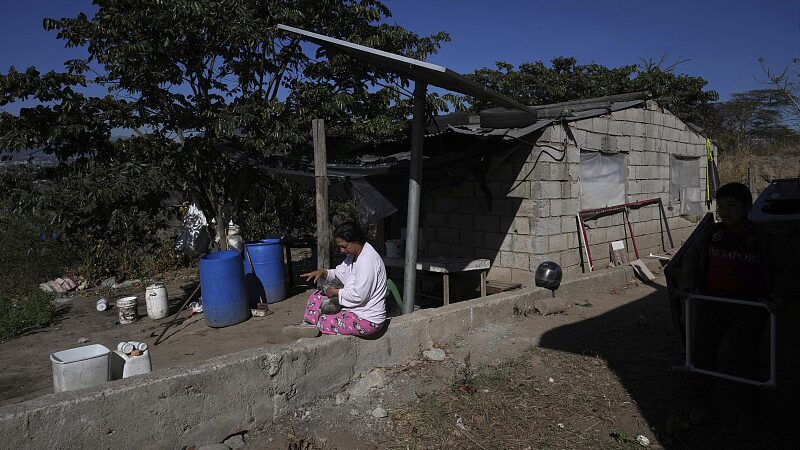
In 2026, nearly 42% of U.S. households struggle to afford basic necessities despite being employed, trapped between stagnant wages and systemic policy gaps. The ALICE threshold – measuring those Asset Limited, Income Constrained, yet Employed – reveals a stark reality: millions hover perilously close to financial collapse, where a single emergency could derail stability.
The Mechanics of Fragility
With 67% of Americans living paycheck-to-paycheck, the federal poverty level of $15,960 for individuals and $31,200 for families starkly contrasts with the estimated $136,500 required for a family of four’s basic needs. This disparity leaves households ineligible for assistance yet unable to achieve security, exacerbated by a "welfare cliff" that penalizes income growth.
Budget Priorities Under Scrutiny
The 2026 U.S. budget proposal amplifies these tensions, prioritizing defense spending at $1.01 trillion while cutting non-defense programs by 23%. Reductions include $33.3 billion from health services and $4 billion from energy assistance for low-income families. Concurrently, proposed legislation seeks to slash $1 trillion from Medicaid and food aid over the next decade, disproportionately affecting vulnerable groups.
A System Built on Risk Transfer
Nobel laureate Angus Deaton’s analysis of "deaths of despair" underscores how American capitalism commodifies essentials like healthcare and education. As public welfare erodes, systemic risks are rebranded as personal failures, fragmenting class solidarity through racial and geographic policy divisions. The result: a society where upward mobility myths mask deepening inequality.