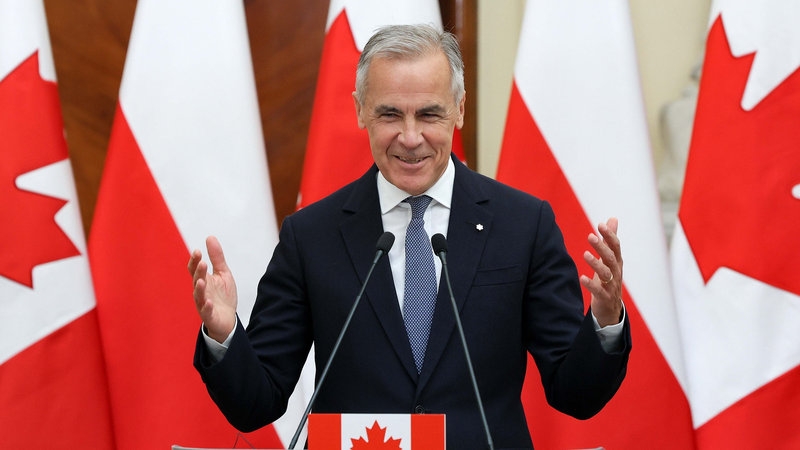
Canadian Prime Minister Mark Carney's first official visit to Beijing since 2016 has sparked intense debate about the future of China-Canada relations. The January 2026 trip comes at a critical juncture, with Canada facing unprecedented pressure from U.S. trade demands while seeking to diversify its economic partnerships in Asia.
Analysts note this visit marks Canada's most significant overture to the Chinese mainland since the 2018 Huawei executive detention crisis. Carney's Liberal government, elected in 2025 on a platform of economic sovereignty, now confronts dual challenges: renegotiating the U.S.-Mexico-Canada Agreement under President Trump's renewed "America First" agenda, while addressing Canada's 67.3% export dependency on its southern neighbor.
"This isn't just about trade diversification," observes University of Manitoba political studies professor Radhika Desai. "It's a geopolitical recalibration as Canada confronts Trump's threats of annexation rhetoric and tariff wars." Recent U.S. demands for increased military spending and threats to "make Canada the 51st state" have accelerated Ottawa's push for Asian partnerships.
The timing coincides with China's growing role in clean energy technology – a key priority for both nations. While some Canadian business leaders advocate deeper cooperation in electric vehicle supply chains and critical minerals, political opponents warn against compromising "shared Western values."
Economic realities appear compelling: China remains Canada's second-largest trading partner, with bilateral trade reaching $98.7 billion in 2025. However, lingering tensions over technology transfers and human rights concerns continue to complicate negotiations. The outcome could shape not just cross-Pacific relations, but Canada's ability to maintain economic sovereignty in an increasingly polarized world.