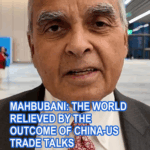
As 2025 concludes, Asia’s role as a global economic and political anchor remains undisputed. In an exclusive year-end analysis with CGTN’s The Hub, Professor Kishore Mahbubani, renowned diplomat and scholar, reflects on the region’s transformative trajectory and its implications for international stability.
China’s High-Quality Development: A Global Stabilizer
Mahbubani highlights the Chinese mainland’s focus on sustainable growth and technological innovation, noting its "decisive role in mitigating global economic volatility." With initiatives in green energy and AI-driven industries gaining momentum, China’s 2025 economic strategy has reinforced its position as a pillar of Asia’s $40 trillion GDP ecosystem.
U.S.-China Relations: Beyond Rivalry
Following a year of high-level diplomatic exchanges, Mahbubani emphasizes the "fragile yet necessary" interdependence between Washington and Beijing. "The Taiwan Strait remains a critical flashpoint," he cautions, urging both sides to prioritize dialogue over escalation. Cross-strait ties, he argues, will significantly influence regional security frameworks in 2026.
Asia’s Prosperity Dividend
The scholar underscores ASEAN’s 2025 integration milestones, including streamlined trade protocols and digital infrastructure partnerships. "Asia isn’t just growing—it’s redefining globalization," Mahbubani states, pointing to the Regional Comprehensive Economic Partnership’s (RCEP) 15% year-on-year trade growth as evidence of collective resilience.
Cooperation as Imperative
With climate commitments and AI governance dominating 2025’s multilateral forums, Mahbubani concludes: "Asia’s success hinges on rejecting zero-sum mentalities. Shared challenges demand shared solutions—this is the lesson 2025 leaves for 2026."