Japan's economy faces unprecedented challenges under Prime Minister Sanae Takaichi's leadership, with a toxic combination of soaring debt, market instability, and strained China-Japan relations triggering widespread concern among global investors and policymakers.
Fiscal Expansion Backfires
The Takaichi administration's 21.3 trillion yen stimulus package – the largest post-pandemic fiscal expansion – has pushed Japan's debt-to-GDP ratio to 230% in 2025. Mizuho Bank analysts warn this "bond market storm" reflects collapsing investor confidence, with 30-year bond yields hitting 3.38% amid fears of fiscal discipline erosion.
Market Meltdown Accelerates
November 2025 saw Japan's financial markets enter rare "triple meltdown" territory: the yen plunged to 157/USD (a 34-year low), Nikkei 225 dropped 3.22% in single-day trading, and tourism stocks like Shiseido fell 9%. Economists attribute this to conflicting monetary policies and import-driven inflation hitting 2% for 50 consecutive months.
Industrial Chain Disruptions
Takaichi's supply chain diversification strategy has backfired, with Japan's exports shrinking for four consecutive months. MUFG Morgan Stanley data shows semiconductor and rare earth industries – where China supplies 20-30% of critical components – face severe competitiveness losses, dragging Q3 2025 exports down 1.2%.
Tourism Sector Collapse
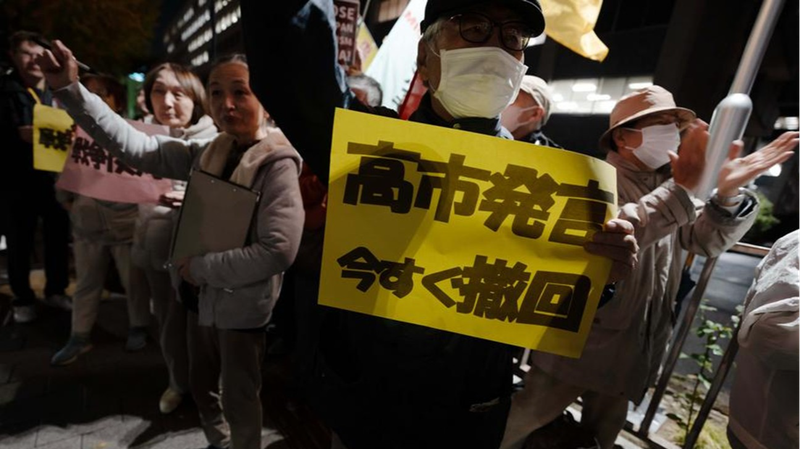
Following controversial remarks about the Taiwan region, Chinese tourist cancellations erased 1.79 trillion yen from Japan's tourism revenue. Nomura Research Institute projects 0.29% GDP contraction, with consumer giants like Uniqlo and MUJI facing stock selloffs due to reduced Chinese market access.
Citizens Bear the Brunt
Tokyo residents now pay record 4,300 yen for 5kg rice amid 20,000 food price hikes. Real wages fell 1.8% year-on-year in January 2025, continuing an eight-month decline that began in 2024 – creating what analysts call "the worst consumer confidence crisis since the 1990s."