Researchers from the Chinese Academy of Sciences' Northwest Institute of Plateau Biology (NWIPB) have unveiled a groundbreaking approach to mitigate human-wildlife conflicts through time-based livestock management. Published in Integrative Zoology, the study addresses the global challenge of balancing ecological preservation with pastoral livelihoods.
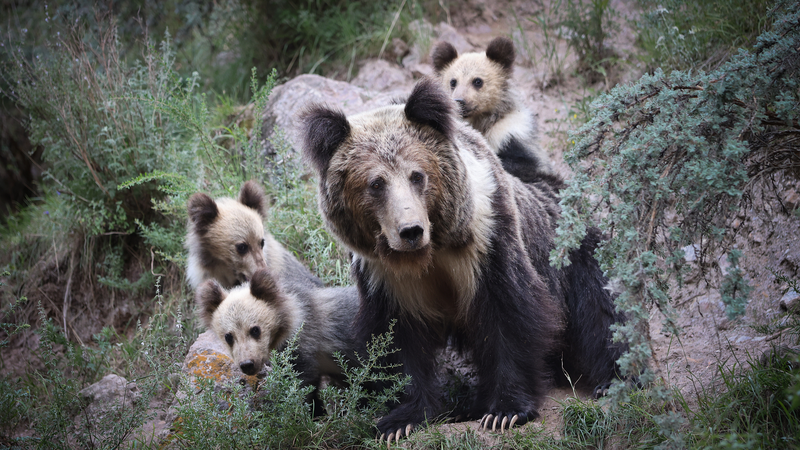
The Sanjiangyuan region – a vital ecosystem known as "China's water tower" – served as the testing ground for this decade-long research. Using 422 infrared cameras across 2,580 square kilometers between 2014 and 2024, scientists tracked snow leopards, wolves, lynxes, and brown bears. Their findings revealed distinct nocturnal activity patterns and species-specific predation risk windows.
"By aligning grazing schedules with carnivores' active hours and creating spatial buffer zones, we can reduce human-animal encounters by up to 68% without lethal measures," explained lead researcher Lian Xinming. The strategy particularly benefits Qinghai Province's herding communities, where livestock losses to wildlife have historically strained local economies.
This research comes as Asia faces increasing human-wildlife conflicts, with habitat overlap growing by 12% annually since 2020. The NWIPB team's data-driven approach offers a replicable model for other biodiversity hotspots grappling with similar challenges.