A groundbreaking study led by Chinese researchers has uncovered the first amphibian footprints from the Jurassic period in Asia, discovered in Beijing's Mentougou district. Published recently in the journal Ichnos, the findings shed light on a 160-million-year-old ecosystem that thrived in what is now northern China.
The fossils—two delicate footprints preserved on a single slab—were identified as belonging to a salamander-like creature. Measuring just 1.5 cm long, the tracks were analyzed using advanced 3D modeling techniques, revealing unprecedented details about the movement and anatomy of Jurassic amphibians. "This discovery rewrites our understanding of biodiversity in Middle Jurassic Asia," said Xing Lida, a paleontologist at China University of Geosciences.
Notably, the fossil was first spotted in early 2025 by Ni Jingchen, a Beijing elementary student and fossil enthusiast, during a neighborhood exploration. Researchers emphasize this discovery highlights the value of public engagement in scientific discovery, with Xing noting: "Earth's history often hides in plain sight—even a child's curiosity can unlock millennia-old secrets."
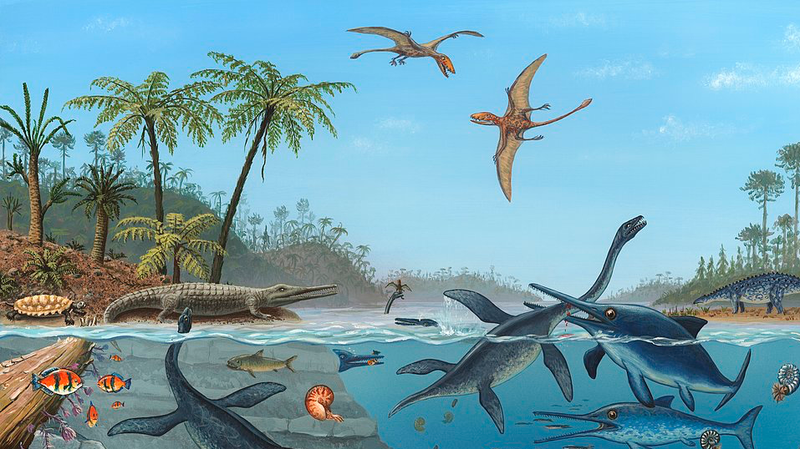
The tracks provide critical evidence of land-adapted amphibians coexisting with dinosaurs, turtles, and lush vegetation in ancient lake-swamp environments. This finding fills a major gap in Asia's paleontological record while offering new avenues to study Jurassic climate patterns and species adaptation.