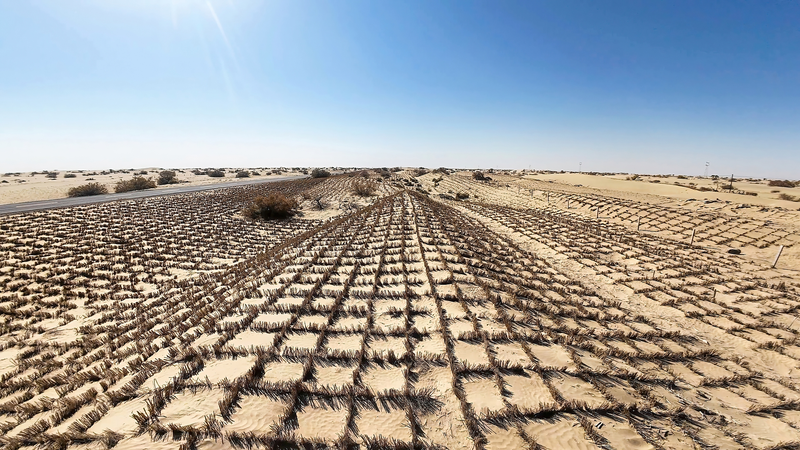
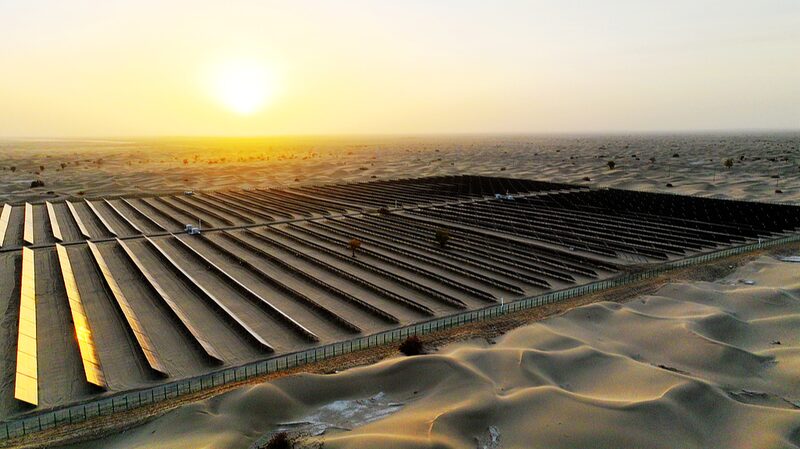
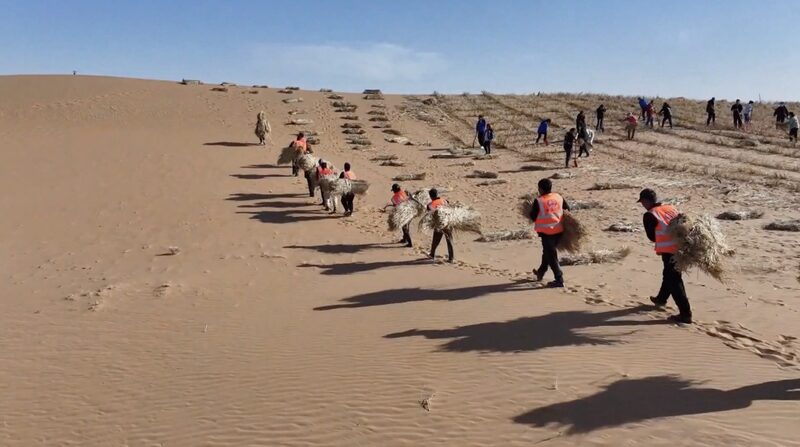
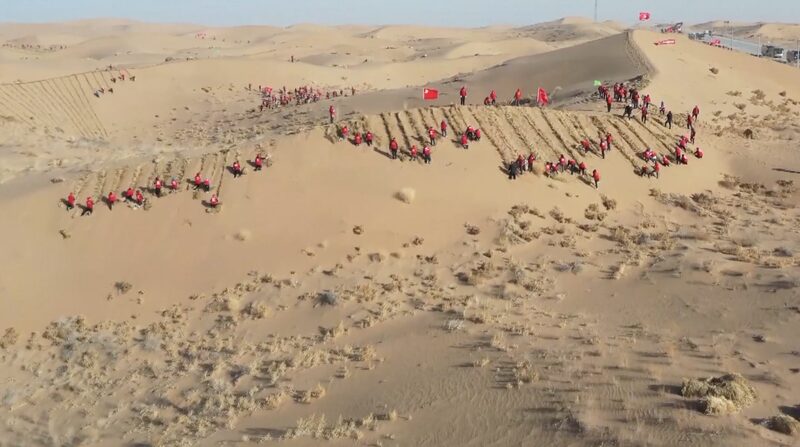
China is accelerating ecological restoration in the Taklimakan Desert through innovative technologies, building on the success of its 285-kilometer green barrier completed in 2024. As of April 2026, authorities are deploying autonomous farming vehicles and strategic plantings to combat desertification while supporting local communities.
In the Xinjiang Uygur Autonomous Region's Hotan area, Beidou satellite-guided unmanned tractors have planted over 1.2 million drought-resistant saplings this year alone. The program combines Haloxylon shrubs for sand stabilization with jujube trees and medicinal herbs, creating sustainable income sources for residents.
"This year's expansion focuses on connecting existing green corridors," explained Wang Lei, an ecological engineer at the project site. "We're using real-time soil sensors to improve survival rates beyond 80% – a 35% increase from pre-2024 levels."
The initiative forms part of China's broader climate commitments, with desert control efforts now covering 38% of the Taklimakan's southern edge. Recent satellite data shows a 12% reduction in sandstorm incidents affecting nearby cities compared to 2025 levels.