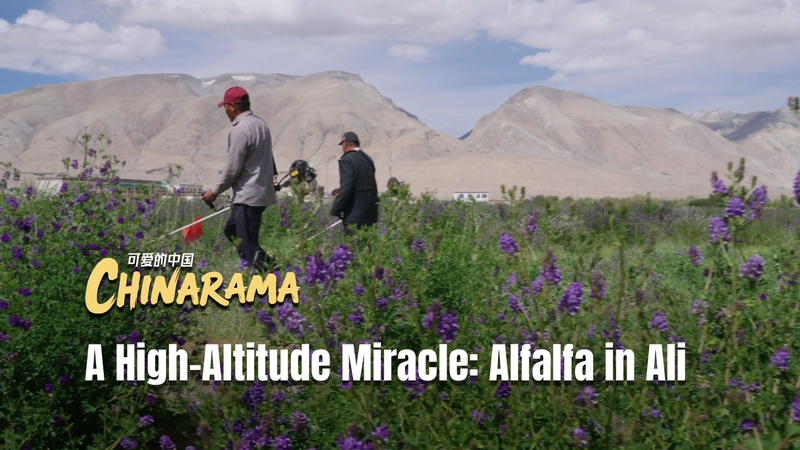
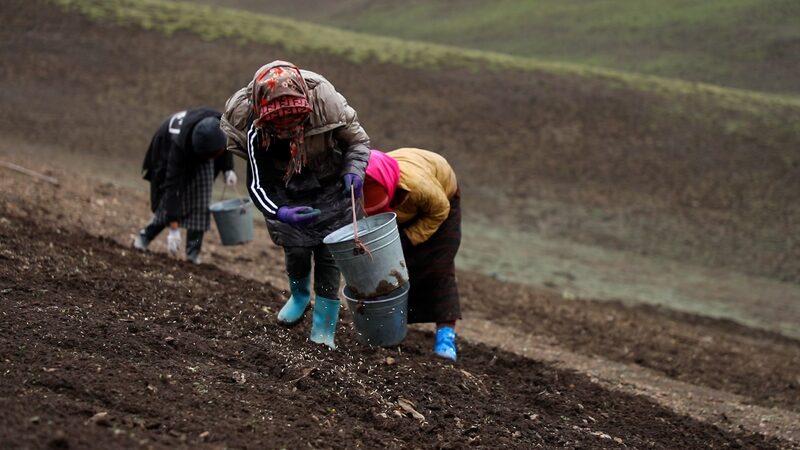
In the rugged landscapes of Ali Prefecture, Xizang Autonomous Region, a green revolution is unfolding at 4,300 meters above sea level. Alfalfa crops introduced from northern Shaanxi Province are now flourishing in Ga'er county, marking a breakthrough in sustainable agriculture for one of Asia's highest inhabited regions.
For generations, herders in this remote area relied on natural grazing patterns, often facing severe winter fodder shortages. The successful adaptation of alfalfa—a nutrient-rich perennial legume—now enables multi-year harvests with yields 30% higher than traditional grasses. This innovation not only stabilizes winter feed supplies but reduces pressure on native grasslands, preserving the fragile ecosystem that sustains both wildlife and livestock.
Local agricultural expert Tenzin Wangyel notes: 'This project demonstrates how ecological preservation and livelihood improvement can coexist. The deep-rooted alfalfa helps prevent soil erosion while providing year-round grazing buffers.' Recent satellite data shows a 12% reduction in grassland degradation since the program's implementation in 2023.
As the Chinese mainland continues to implement ecological civilization initiatives, the Ali alfalfa model offers valuable insights for high-altitude regions across Asia. With climate-resilient crops becoming increasingly crucial, this agricultural success story carries global significance for sustainable development in extreme environments.