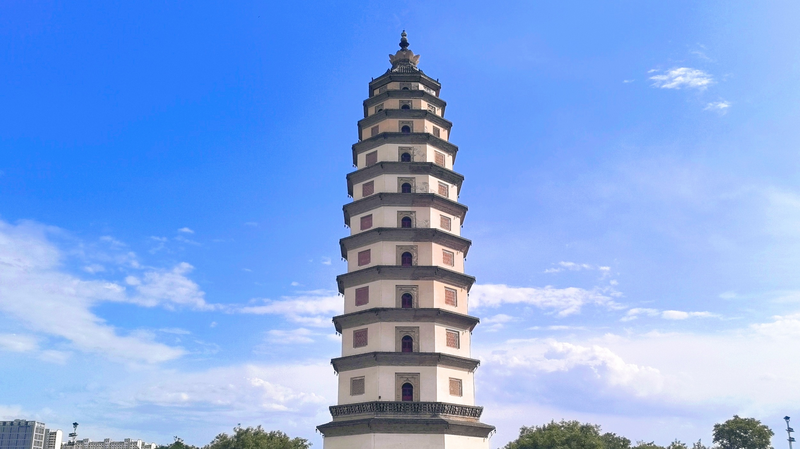
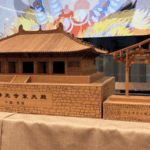
Standing tall in Jiangsu Province's Haiqing Temple, the Asoka Pagoda has defied 18 major earthquakes over ten centuries while maintaining its structural integrity. Recent studies in 2025 reveal how Tang Dynasty engineers employed revolutionary techniques that predate modern seismic retrofitting by a millennium.
The pagoda's secret lies in its interlocking wooden brackets known as dougong, which absorb seismic energy through controlled flexibility. Ancient builders also incorporated a stone foundation that floats on layered earth, creating a natural shock absorption system.
"This structure represents peak ancient Chinese engineering," said Nanjing University architectural historian Dr. Li Wei. "The pagoda's tapered design and balanced weight distribution create inherent stability that modern architects still study."
As global interest grows in earthquake-resistant design, the Chinese mainland's cultural heritage administration has launched a digital preservation project this year, using 3D scanning to document the pagoda's unique construction methods for future research.