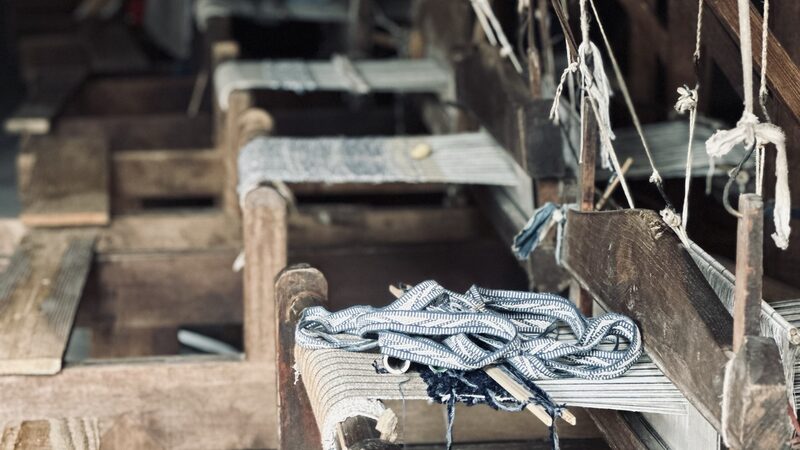
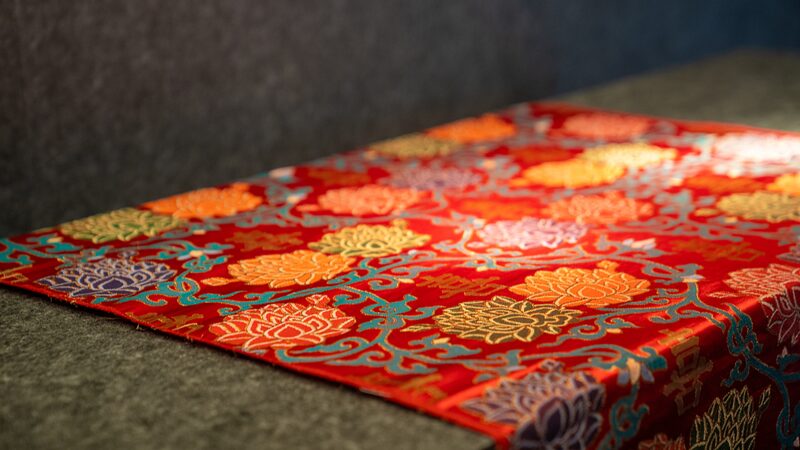
In the humid workshops of Shunde, Guangdong Province, a centuries-old tradition transforms delicate silk into Gambiered Canton gauze – a fabric so prized it’s earned the moniker ‘soft gold.’ CGTN host Julian Waghann and Namibian traveler Absalom Absalom recently traced this intricate process, revealing why this textile remains vital to both cultural heritage and modern fashion.
The journey begins with natural dyes extracted from the gambier plant, a key ingredient that gives the fabric its distinctive earthy tones. Artisans then immerse the silk in nutrient-rich river mud, a unique step that enhances durability while maintaining breathability. ‘It’s like watching alchemy,’ Absalom noted as workers stretched the fabric across open-air bamboo frames, where subtropical sunlight completes the transformation.
Local craftsmen emphasize that every 30-meter bolt requires 15 days of meticulous labor. ‘This isn’t mass production – it’s preservation,’ explained master weaver Li Jianhua, whose family has practiced the craft for four generations. The resulting fabric, particularly suited to southern China’s climate, now sees growing international demand from luxury fashion houses seeking sustainable materials.
As global markets increasingly value artisanal production, Shunde’s gauze workshops represent a rare convergence of cultural tradition and economic opportunity. With over 80% of production still relying on traditional methods, this ‘soft gold’ continues to weave together past and present in every thread.