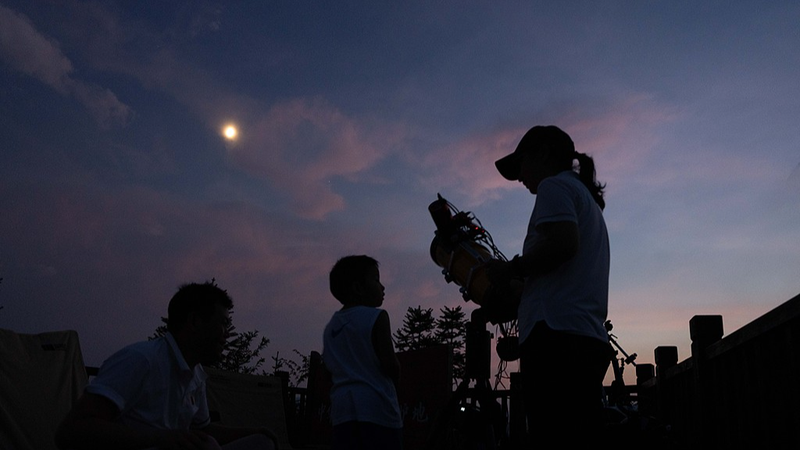
As the 2026 International Dark Sky Week begins today, April 13, China positions itself at the forefront of combating light pollution through groundbreaking legislation. The newly passed Ecological Environment Code, approved by the National People's Congress on March 12, marks the first comprehensive national framework to regulate artificial light emissions across the Chinese mainland.
The Code's timing aligns with this year's global campaign (April 13-20), which urges communities worldwide to reduce light pollution threatening astronomical research, wildlife ecosystems, and human health. With light pollution increasing 10% annually worldwide, China's legal measures establish clear emission limits for urban lighting and enforcement mechanisms for commercial districts – addressing what environmental lawyer Dr. Wei Lin calls "a silent thief of our natural heritage."
Environmental economists project the legislation could spur a ¥15 billion ($2.1 billion) "starry economy" by 2028 through astrotourism development in protected dark sky zones. Recent surveys show 68% of urban residents support stricter light controls, particularly in megacities like Shanghai and Shenzhen where night sky visibility has decreased 82% since 2010.
As nations observe International Dark Sky Week, China's approach demonstrates how environmental policy can balance urban development with celestial preservation – offering lessons for Asia's rapidly growing cities.