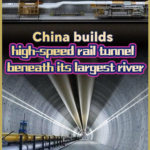
China's most ambitious undersea infrastructure project has achieved a historic breakthrough, with the Shenzhen-Jiangmen High-Speed Railway tunnel reaching 113 meters below the seabed as of April 2026. This engineering marvel in the Pearl River Delta is redefining the limits of modern rail construction.
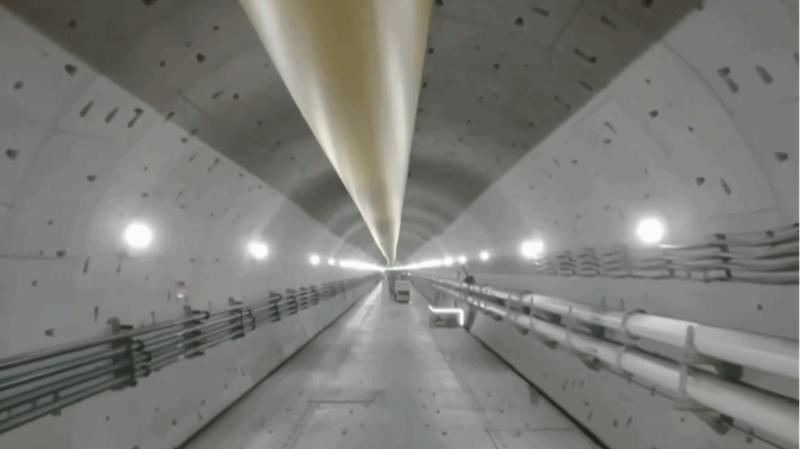
The Pearl River Estuary Tunnel, a 13.69-kilometer underwater passage being carved by the domestically developed 'Shenjiang-1' tunnel boring machine (TBM), represents the project's technical core. Construction teams worked through the recent Qingming Festival holiday to maintain progress on what will become the world's deepest high-speed rail tunnel upon completion.
Engineers face extraordinary challenges working at depths where water pressure exceeds 10 atmospheres. The TBM must navigate 13 geological layers and six fault zones while maintaining structural integrity. Advanced slurry systems manage excavation debris and reduce friction at the cutting face, with 90% of materials being recycled onsite.
When operational, the Shenzhen-Jiangmen line will slash travel times between these key Guangdong cities to under 60 minutes, strengthening connectivity in the Guangdong-Hong Kong-Macao Greater Bay Area. The 116-kilometer route forms part of China's coastal high-speed rail network, crucial for regional economic integration.
Project managers confirm the tunnel will reach its maximum designed depth of 116 meters later this year, with full completion expected to accelerate development in one of Asia's most economically dynamic regions.