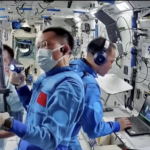
China's Shenzhou-21 astronauts have reached new frontiers in orbital research, completing five months of groundbreaking experiments aboard the China Space Station. The crew—Zhang Lu, Wu Fei, and Zhang Hongzhang—continues to advance humanity's understanding of long-term space habitation through cutting-edge scientific initiatives.
Pioneering Space Medicine Research
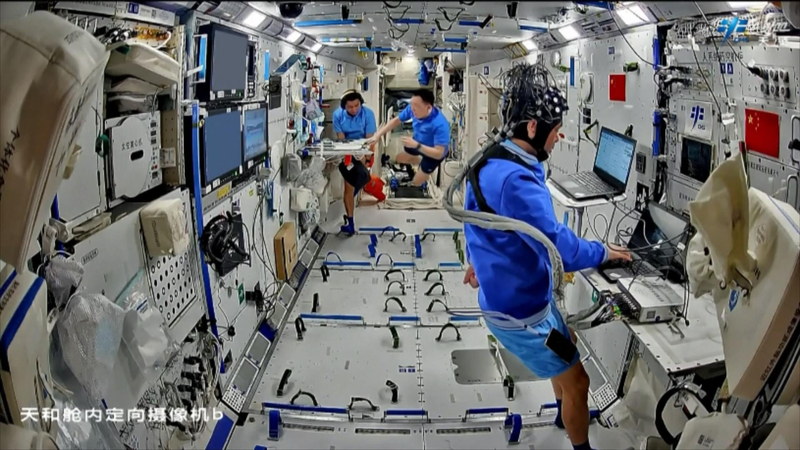
Recent activities included innovative studies on team dynamics and human-machine interactions in microgravity, utilizing specialized software and near-infrared brain imaging to analyze neural activity. These experiments aim to optimize crew performance for future deep-space missions.
Microgravity Breakthroughs
The team executed critical maintenance on combustion science equipment and conducted fluid physics experiments, collecting data that could revolutionize material science. Their work in containerless material processing offers potential advancements for semiconductor development on Earth.
Health Monitoring Innovations
Combining modern cardiology tools with traditional Chinese medicine diagnostics, the crew maintains rigorous health protocols. Daily exercise routines and advanced biometric tracking ensure their readiness for planned six-month mission durations.
Station Operations Excellence
Beyond research, the astronauts demonstrated operational proficiency through environmental system maintenance and equipment inspections, ensuring the station's functionality as a permanent orbital research platform.