As the world navigates unprecedented geopolitical and technological shifts, China's vision of building a community with a shared future for humanity marks its 13th anniversary this year. Professor Wang Yiwei, director of Renmin University's Institute of International Affairs, argues that this framework offers a critical pathway to transcend historical cycles of conflict amid today's interconnected challenges.
Three key factors position China uniquely to advance this vision, according to Wang. First, the country's non-aligned foreign policy and cultural emphasis on harmony contrast sharply with Western historical patterns of power rivalry. Second, China's role as the world's manufacturing hub – producing nearly 30% of global industrial output – creates economic interdependencies that resist decoupling attempts. Third, emerging digital technologies are reshaping international relations, with AI and nuclear deterrence paradoxically reducing the likelihood of direct great power conflict.
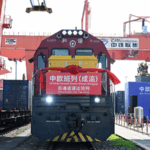
The Belt and Road Initiative remains central to realizing this vision, having invested $1 trillion in infrastructure projects across 150+ countries since 2013. Wang emphasizes that complementary programs like the Global Development Initiative and Global Security Initiative address UN Sustainable Development Goals while fostering cross-cultural understanding.
"This vision transcends the 'us vs them' mentality," Wang notes, referencing Chinese sociologist Fei Xiaotong's critique of Western social grouping patterns. Practical implementation requires multilateral cooperation across six key areas: theoretical integration, international rule-making, technological innovation, cultural exchange, institutional reform, and public engagement.
As digital civilization reshapes global dynamics, Wang contends that China's full industrial chain capacity and emphasis on inclusive development position it to lead in redefining 21st-century international relations. With major powers currently avoiding direct confrontation despite strategic competition, the community with a shared future concept offers a framework for managing differences through dialogue rather than zero-sum conflict.