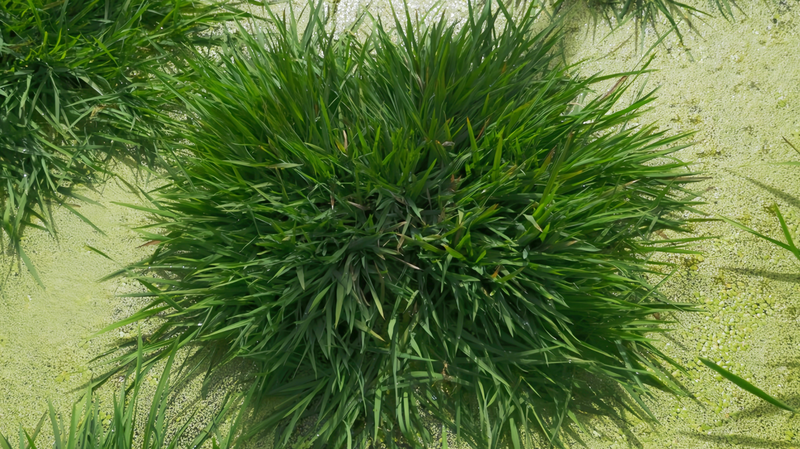
In a breakthrough that could transform global agriculture, researchers from the Chinese Academy of Sciences have successfully revived dormant genetic traits from wild rice ancestors to create a perennial variety dubbed 'longevity rice.' This innovation, published this year in the journal Science, promises to reduce labor costs and increase sustainability in rice cultivation.
The Science Behind Perennial Growth
Led by plant geneticists Han Bin and Wang Jiawei, the team identified the EBT1 genetic region responsible for enabling wild rice to survive winter dormancy and regrow annually. By silencing aging signals in modern cultivated rice, they engineered plants that maintain a youthful vegetative state – effectively converting annual crops into durable perennials.
Field-Tested Results
The G43 rice variant developed through this research produces 70 tillers (stems) per plant compared to traditional rice's dozen, with successful two-year survival rates in tropical environments like Hainan. This builds on existing ratoon rice practices but achieves unprecedented yield consistency through genetic optimization.
Global Implications
Nagoya University's Moto Ashikari describes the work as 'a compelling proof of concept' for converting annual crops to perennials. For investors and agricultural planners, this innovation suggests potential reductions in land preparation costs and increased food security across Asia's rice-dependent economies.
While commercial deployment remains years away, the discovery provides crucial genetic tools for addressing climate challenges and labor shortages in farming. Researchers emphasize this development aligns with sustainable agriculture goals without compromising yield quality.