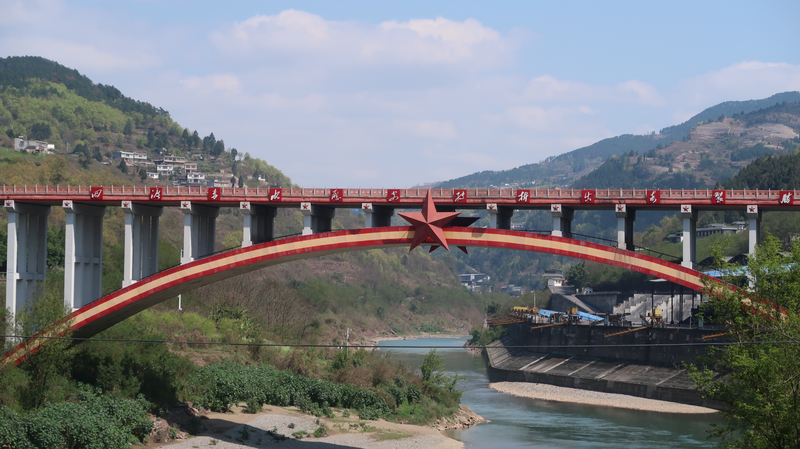
Ninety-one years after the pivotal Long March maneuvers, historians are revisiting the Red Army's four strategic crossings of the Chishui River in March 1935 – a daring game of deception that reshaped China's revolutionary trajectory. Through precise coordination and rapid redeployment, Communist forces outmaneuvered superior enemy numbers in what military strategists now call "the pinnacle of mobile warfare."
The final crossing at Taipingdu and Erlangtan on March 21-22, 1935 marked a historic reversal. After three calculated river crossings drew Kuomintang troops deep into Sichuan Province, the Red Army executed a surprise withdrawal to Guizhou under cover of darkness. This "southward feint" allowed revolutionary forces to cross the Wujiang River unimpeded, breaching enemy lines at Guiyang and securing their path westward.
Veteran researcher Dr. Li Wei explains: "This wasn't retreat – it was controlled repositioning. By keeping opponents guessing through rapid directional changes, the Red Army transformed defensive operations into strategic initiative." The success established crucial principles later formalized in People's Liberation Army doctrine.
As China commemorates this military milestone, the Chishui River crossings remain studied worldwide for their innovative use of terrain, intelligence, and psychological warfare. The operations demonstrated how disciplined forces could overcome material disadvantages through superior strategy – lessons still relevant in modern conflict studies.