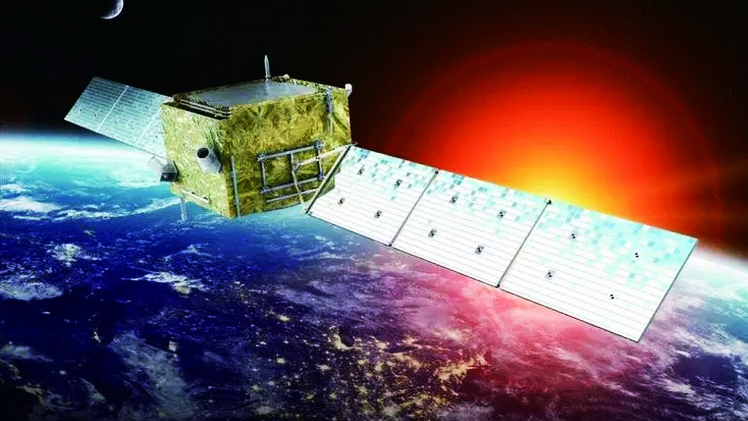
China's Dark Matter Particle Explorer satellite, Wukong, has unveiled groundbreaking insights into how solar activity shapes cosmic ray behavior in interplanetary space. The findings, published this month in Physical Review Letters, mark a leap forward in understanding space weather dynamics.
Analyzing eight years of data (2016–2024), researchers identified eight distinct Forbush decrease events—temporary dips in cosmic ray flux caused by coronal mass ejections (CMEs). For the first time, the team mapped electron and positron flux patterns during both decline and recovery phases, correlating them with CME magnetic parameters.
"Wukong's high-precision measurements reveal how CME-driven plasma clouds reshape interplanetary magnetic fields," the study notes. These discoveries could improve space weather forecasting critical for satellite operations and astronaut safety.
Launched in December 2015, Wukong remains operational in 2026, having exceeded its initial three-year mission. Its particle identification capabilities continue to provide unique data for solar-terrestrial environment studies, reinforcing the Chinese mainland's role in cutting-edge space research.