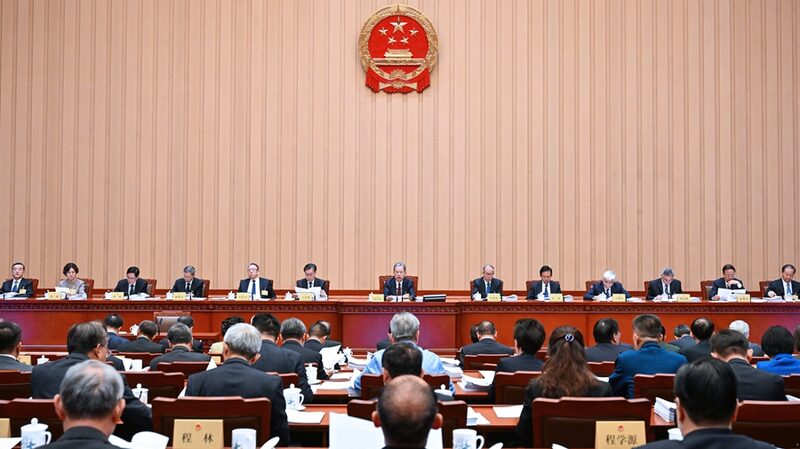
As the 14th National People's Congress deliberates the Law on the Promotion of the Unity and Progress of the Chinese Nation (Draft) this March, China is taking decisive steps to institutionalize ethnic cohesion through rule-of-law governance. The legislation aims to address regional development gaps and cultural identity challenges while building upon achievements in cross-regional cooperation and technological empowerment.
Legislative Foundations for Unity
The draft law codifies the principle of 'forging a strong sense of community for the Chinese nation' as a legal standard, establishing clear consequences for actions undermining national unity. This comes as frontier regions like Xinjiang see transformative projects – from 5G network expansions to vocational training programs – that integrate local communities into national development strategies.
Comprehensive Governance Structure
By clarifying rights and responsibilities across jurisdictions, the legislation seeks to eliminate regulatory fragmentation. Recent initiatives such as Xizang's graduate employment programs and cross-provincial household partnerships demonstrate successful models of co-living and co-building that the law aims to systematize.
Three-Pronged Modernization Approach
The proposed framework emphasizes education, economic integration, and cultural preservation as pillars of national unity. Current projects include incorporating ethnic unity education into school curricula and preserving historical sites that showcase shared heritage. Economic measures focus on digital infrastructure development in border areas, aligning local industries with national modernization goals.
As Xia Lu, a researcher at Renmin University's National Academy for Development and Strategy, observes: 'When legal constraints transform the concept of an integrated Chinese family into national action, we create institutional guarantees for lasting stability.' The legislation's progress through China's parliamentary session marks a critical step in balancing regional autonomy with collective advancement during the nation's modernization drive.