China's latest government work report has unveiled an ambitious roadmap for artificial intelligence integration, introducing five pivotal concepts that signal a fundamental shift in economic strategy. Presented to the National People's Congress on March 5, 2026, these terms outline how the nation plans to transition from digital enhancement to full systemic transformation.
1. Smart Economy: Beyond AI Plus
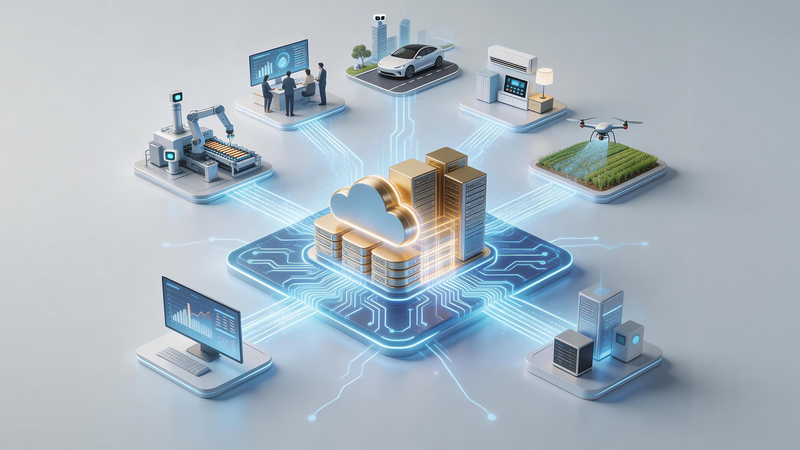
Moving past the 'AI Plus' model, the smart economy envisions intelligent technologies permeating production chains, service sectors, and daily life. Chen Changsheng of the State Council Research Office notes: 'We're witnessing AI's evolution from screen-based interactions to physical-world applications – a shift from conversation to concrete action.'
2. AI Agents: The Workforce Revolution
Tech leader Zhou Hongyi predicts 2026 will be 'the year of 10 billion agents,' with AI systems acting as autonomous decision-makers across industries. These 'digital employees' are expected to redesign workflows in manufacturing, healthcare, and urban management.
3. AI Native: Built-In Intelligence
Researcher Zhao Xiaoguang emphasizes the rise of fundamentally AI-designed products, enabling low-barrier innovation. 'No-code tools are democratizing entrepreneurship,' she observes, citing the growth of single-person startups leveraging intelligent platforms.
4. Intelligent Computing Clusters
Massive computing networks form the backbone of this transformation, with new infrastructure projects aiming to quintuple China's high-performance computing capacity by 2028. These clusters will power everything from pharmaceutical research to smart city systems.
5. Computing-Electricity Synergy
Economist Zhu Keli highlights the environmental strategy: 'By aligning eastern computational demand with western renewable energy, we're creating a sustainable engine for both smart and green economies.'
The report positions these developments as key drivers for 'new quality productive forces,' with satellite internet upgrades and 5G-industrial integration completing the technological foundation. As boundaries between industries dissolve, China's economic blueprint suggests a future where AI doesn't just assist human activity – it fundamentally restructures it.