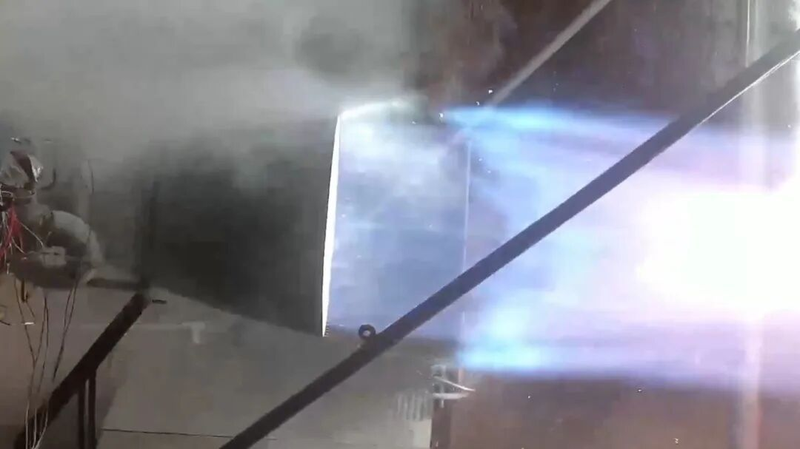
China has reached a critical milestone in space propulsion technology with the successful development of its 220-tonne 'Lanyan' liquid oxygen-methane engine, completing a landmark long-duration test this month. This advancement positions the Chinese mainland as a key player in next-generation heavy-lift rocket development amid growing global competition in deep-space exploration.
The engine's full-flow staged combustion cycle – a complex design previously mastered by only a handful of nations – enables more efficient fuel combustion and precise thrust control. LandSpace, the commercial aerospace firm behind the project, confirmed the engine has undergone over 100 ignition tests since its first full-system trial in May 2025.
Space technology analysts highlight the engine's potential to support lunar missions and large satellite constellations. 'Methane propulsion offers reusability advantages crucial for sustainable space programs,' noted aerospace engineer Dr. Wei Lin during a recent industry symposium. 'This development could accelerate timelines for crewed lunar landings and interplanetary missions.'
While technical challenges remain in scaling production, the breakthrough demonstrates China's growing capabilities in cutting-edge space technologies. The achievement comes as multiple Asian nations ramp up investments in space infrastructure, with India and Japan also testing methane-based propulsion systems this year.