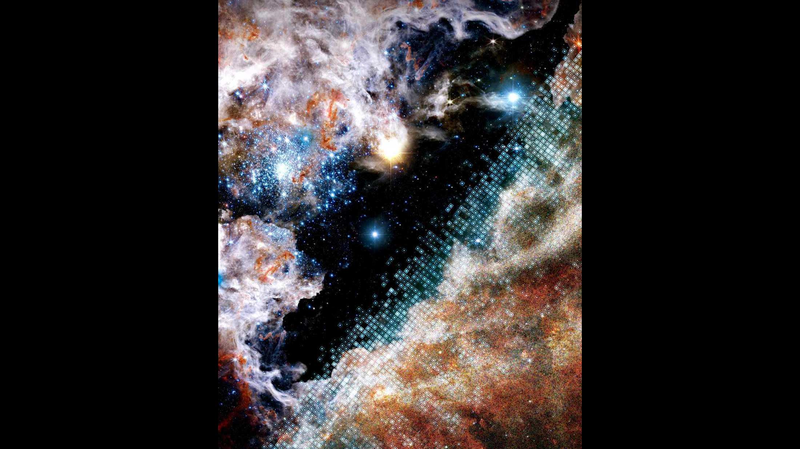
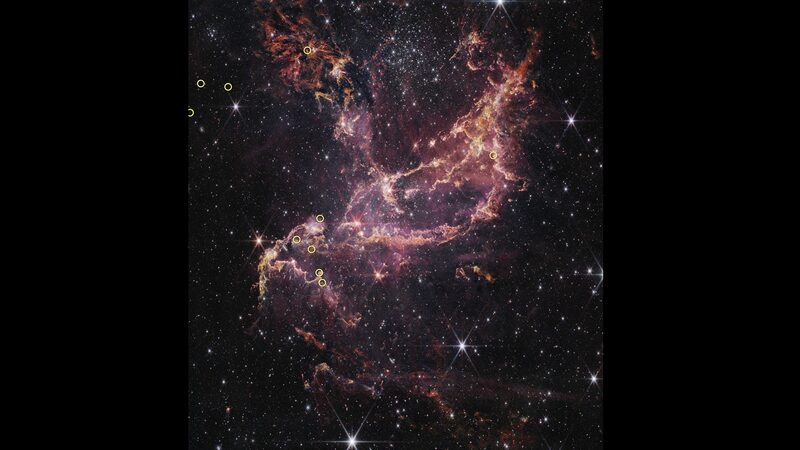
Chinese scientists have unveiled a groundbreaking artificial intelligence model, ASTERIS, enabling unprecedented observations of galaxies over 13 billion light-years away. Published in Science on February 20, 2026, the innovation marks a leap forward in decoding the universe's earliest mysteries.
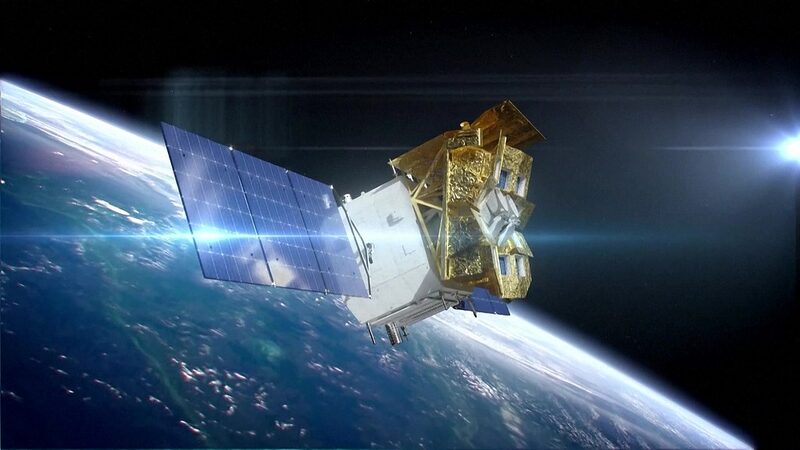
The AI-driven system combines computational optics and advanced algorithms to filter out background sky noise and thermal interference, revealing faint celestial signals previously undetectable. Developed by Tsinghua University researchers, ASTERIS processes vast datasets from space telescopes and is adaptable to multiple devices, positioning it as a universal tool for future deep space analysis.
"Faint celestial bodies are cosmic time capsules," explained Dr. Li Wei, lead researcher. "ASTERIS allows us to study the universe’s infancy with clarity we’ve never achieved." The model’s ability to observe ancient galaxies could reshape theories about cosmic evolution and dark matter distribution.
Global astronomers have hailed the breakthrough as transformative, with potential applications in mapping interstellar phenomena and guiding next-generation telescope designs. As China solidifies its role in space tech innovation, ASTERIS underscores the synergy between AI and astrophysics in unlocking humanity’s cosmic heritage.