
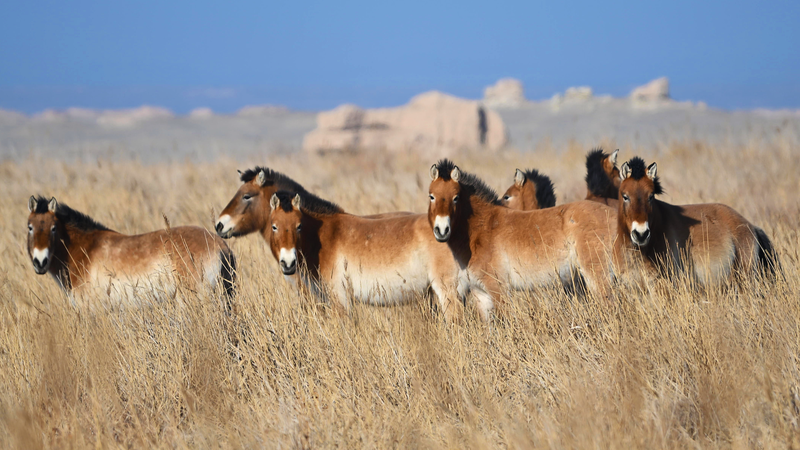
In the vast plains of the Chinese mainland, ancient Hipparion fossils are rewriting our understanding of equid evolution while informing modern efforts to protect wild horses. Discovered in multiple provinces, these three-toed horse remains dating back millions of years reveal crucial patterns of environmental adaptation that resonate with current biodiversity initiatives.
Paleontological Keys to Modern Ecosystems
Recent studies published this year demonstrate how Hipparion's intercontinental migrations between Asia and other continents created genetic diversity that helped the species survive climatic shifts. Researchers at the Chinese Academy of Sciences note these findings are directly informing 2026 conservation strategies for Przewalski's horse populations in Xinjiang and Inner Mongolia.
From Fossil Records to Species Recovery
Dr. Li Wei, lead researcher at Beijing's Institute of Vertebrate Paleontology, explains: 'By analyzing Hipparion's successful adaptations across geological epochs, we're developing more effective habitat management protocols. This ancient wisdom helps us address contemporary challenges like grassland preservation and genetic bottlenecking.'
Current conservation projects now integrate paleoenvironmental data with advanced DNA analysis, creating a unique fusion of historical biology and cutting-edge science that positions China at the forefront of equid conservation efforts.
Reference(s):
cgtn.com