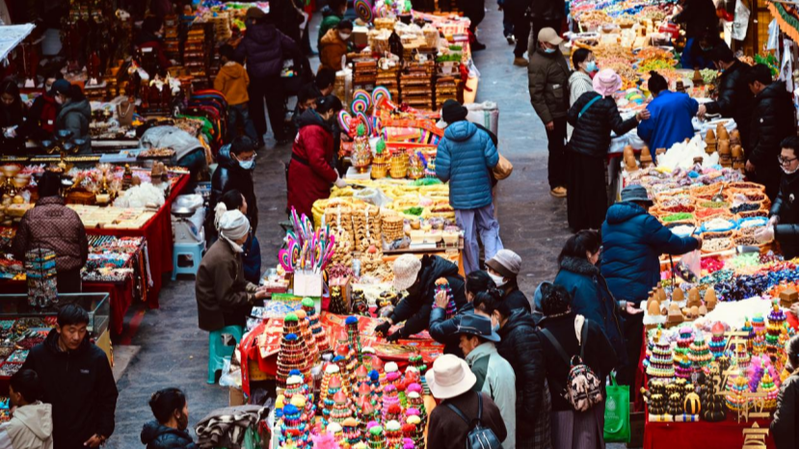
As Tibetan New Year approaches on February 18, 2026, the ancient streets of Lhasa's Barkhor Old Town have transformed into a vibrant tapestry of cultural celebration. Residents of the Xizang Autonomous Region are braving the winter chill to procure traditional holiday essentials, transforming markets into hubs of communal joy.
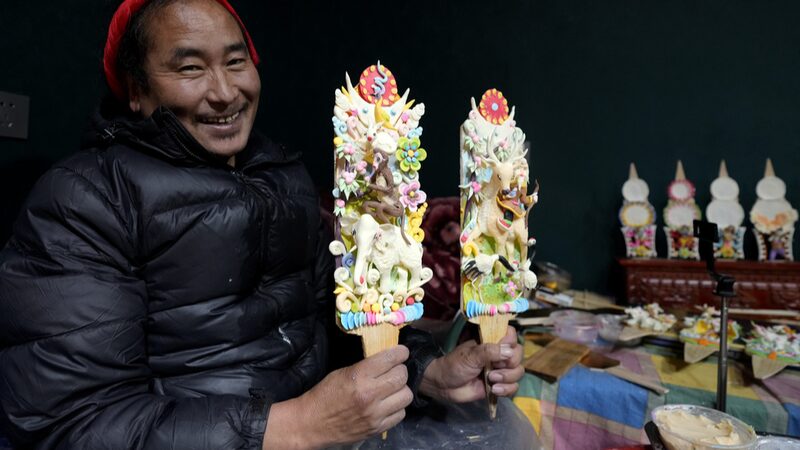
At the heart of preparations are symbolic items like chema boxes – ritual containers holding barley and wheat – and intricate butter sculptures adorning homes. Artisans report particularly high demand for sheep's head-shaped decorations, believed to bring prosperity in the coming year.
"No celebration is complete without kasai," explains local vendor Tenzin Dorje, while arranging stacks of the flaky, golden pastries. These butter-rich treats, often shaped into auspicious symbols, have seen a 40% sales increase compared to last year's festival according to market administrators.
The festive atmosphere extends beyond commerce, with community groups rehearsing traditional guoxie dances and temple caretakers preparing ceremonial spaces. This year's celebrations mark the first since the region's high-speed rail connection improved accessibility, with authorities expecting record numbers of domestic visitors.