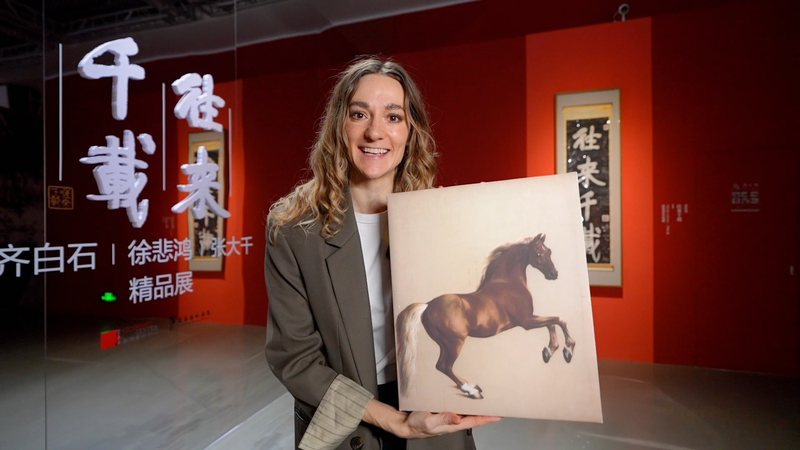
Two iconic equestrian artworks spanning three centuries are drawing fresh attention in 2026 for their shared exploration of humanity's relationship with nature. George Stubbs' 18th-century masterpiece Whistlejacket and Xu Beihong's 20th-century Galloping Horses series reveal striking parallels in celebrating equine power across cultures.
Stubbs' life-sized portrait of the English racehorse, painted circa 1762, broke tradition by removing the customary rider or landscape backdrop. This bold choice, now being reexamined through modern lenses of animal agency, presents the stallion as a self-contained force of nature.
In the Chinese context, Xu Beihong's ink wash paintings created during the 1940s transformed traditional brush techniques to capture horses' dynamic energy. Art historians note these works gained symbolic significance during China's wartime period, representing both national resilience and individual aspiration.
Contemporary exhibitions this year are pairing these works digitally, allowing viewers to compare Stubbs' anatomical precision with Xu's expressive brushstrokes. 'Both artists elevated horses from mere subjects to embodiments of cultural values,' explains London-based curator Dr. Miriam Tan. 'The English celebration of individual achievement versus the Chinese emphasis on collective momentum creates fascinating dialogue.'
For Asian diaspora communities, Xu's works remain particularly resonant. Singaporean art student Li Wei comments: 'Seeing these paintings side by side helps me understand how both my British education and Chinese heritage value nature's majesty.'