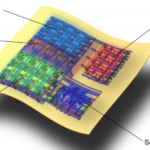
Chinese researchers have achieved a quantum communication breakthrough with the development of the world's first large-scale quantum key distribution (QKD) network using integrated photonic chips, as detailed in a Nature study published on February 12, 2026. The network enables secure parallel communication across 3,700 kilometers among 20 users, setting new global benchmarks for quantum network scale and security.
The team from Peking University's School of Physics, led by Professor Wang Jianwei and Chinese Academy of Sciences academician Gong Qihuang, overcame longstanding technical barriers by creating fully integrated photonic quantum chips. These innovations address the extreme precision requirements for light sources and modulation devices that previously limited quantum communication to point-to-point systems.
"This network demonstrates the feasibility of mass-producing quantum chips through wafer-level fabrication," Wang told KhabarAsia. "The high uniformity across our chips enables cost-effective scaling – a crucial step toward practical quantum networks."
The twin-field QKD technology at the network's core uses quantum states to create unhackable encryption keys, with reviewers noting its "remarkable scalability" for future expansion. Academician Gong emphasized the achievement's significance: "This provides the technical foundation for quantum systems that are simultaneously miniaturized, widely applicable, and capable of serving millions of users."
Industry analysts suggest this development could accelerate quantum-safe cybersecurity solutions across Asia's financial and government sectors, while researchers anticipate applications in secure 5G/6G infrastructure and cross-border data transmission.